

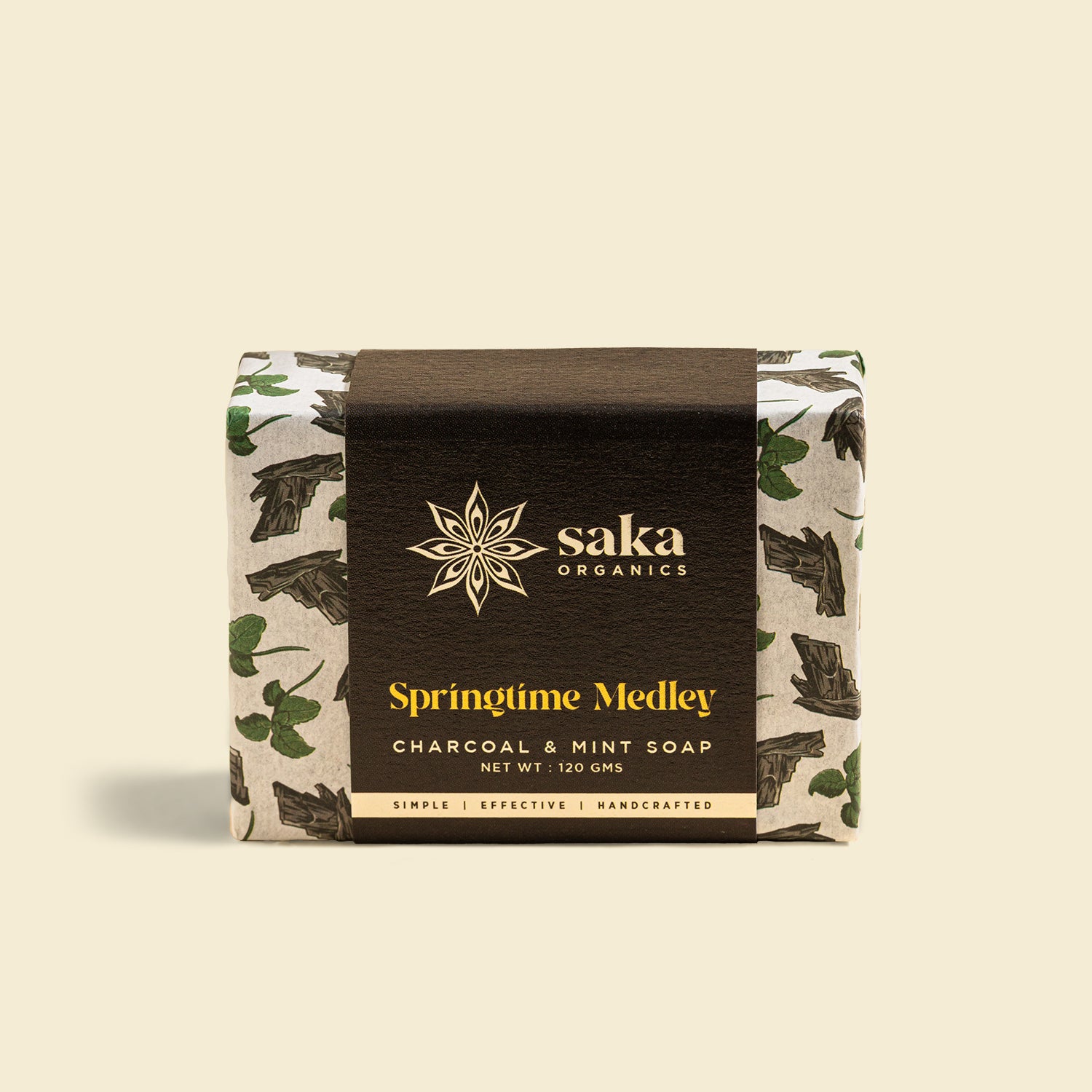
Activated Charcoal & Mint Detox Soap
Quantity: 120 gm
Pairs well with
Description
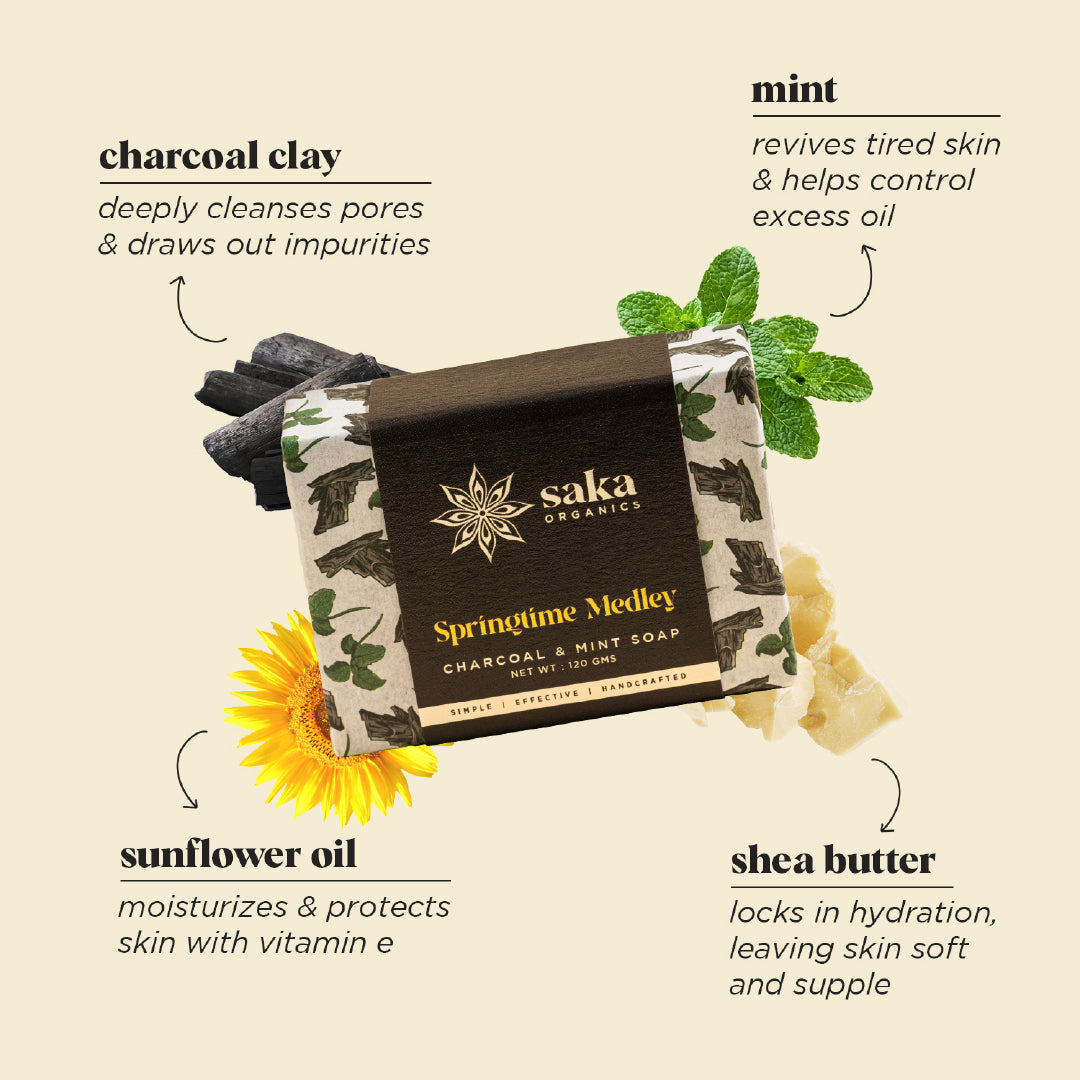
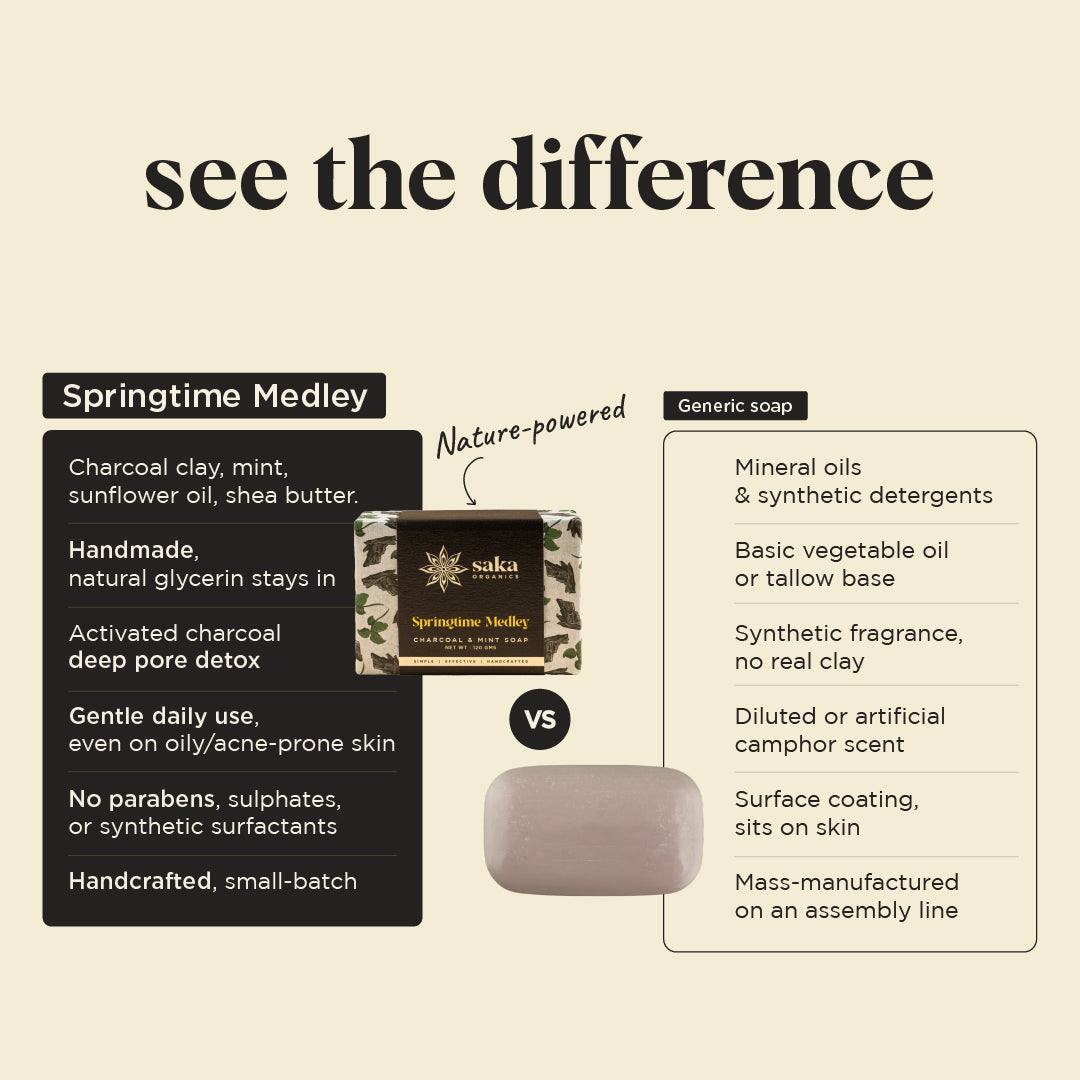
Springtime Medley is a refreshing charcoal soap, made with rice bran, coconut, and sunflower oils, along with shea butter, cocoa butter, activated charcoal, and peppermint essential oil.
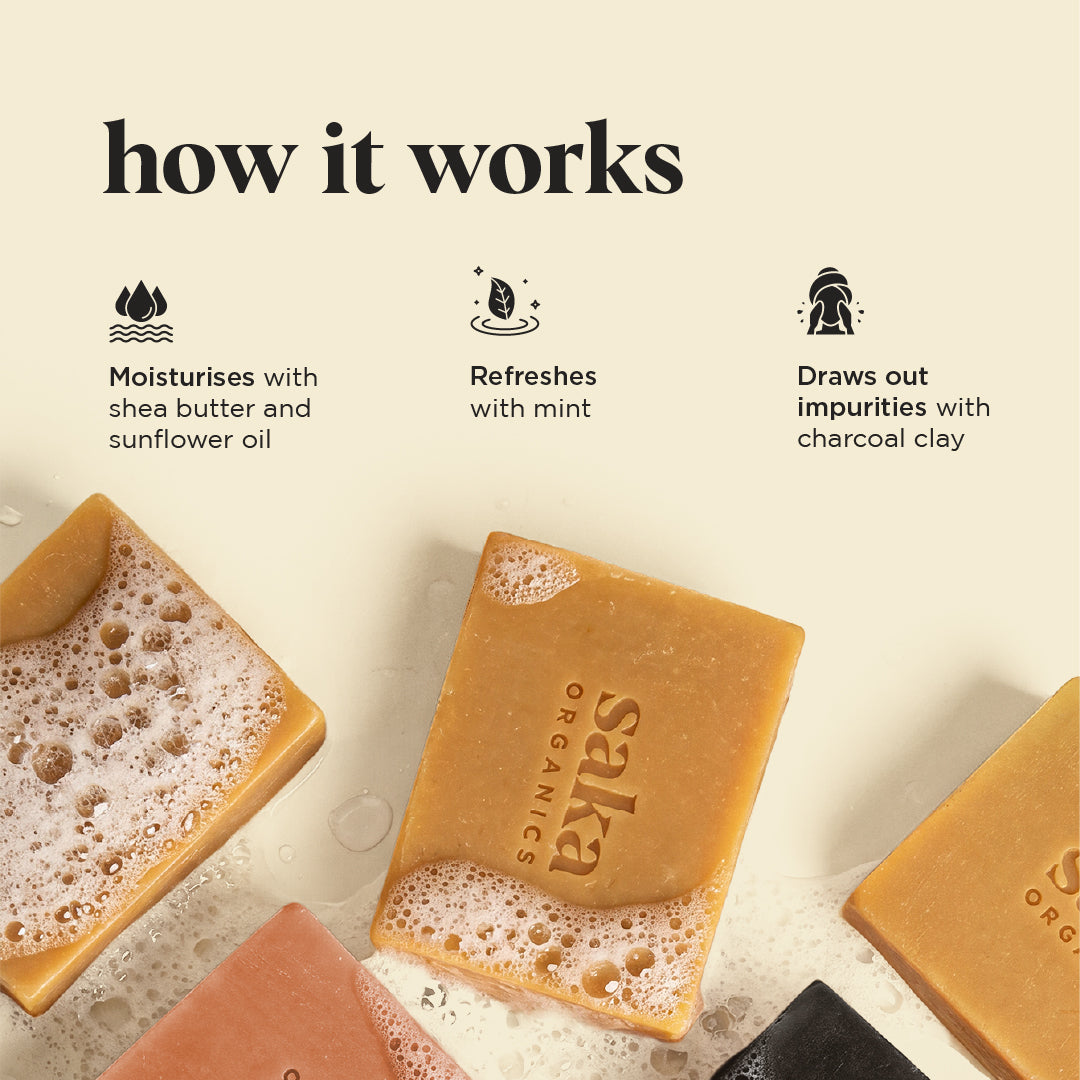
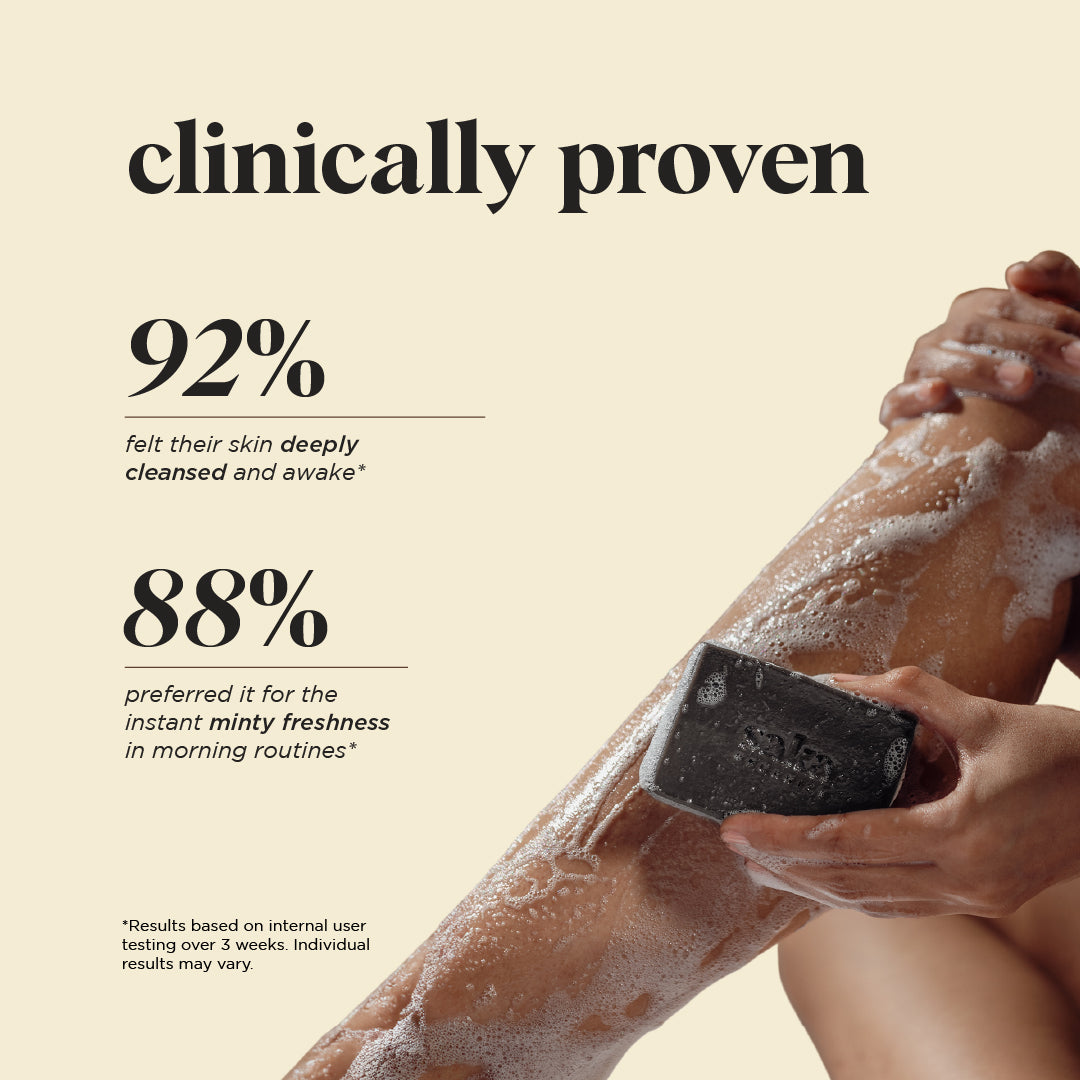
Activated charcoal helps draw out excess oil and impurities, giving the skin a clean, refreshed feel. Peppermint essential oil adds a naturally cool, invigorating sensation, while shea butter, cocoa butter, and nourishing plant oils help leave the skin feeling soft and comfortable after washing.
The result is a fresh, thorough cleanse that leaves your skin feeling clean, refreshed, and soft - perfect for an everyday bath or body ritual.
Key benefits:
- Helps remove excess oil and impurities with activated charcoal
- Refreshes and cools with peppermint essential oil
- Helps nourish and soften with shea butter, cocoa butter, and plant oils
- Leaves skin feeling clean, fresh, and comfortable
Packaging Information
Manufactured by:
SSO Organics Privatet Limited
1-86, Penumarthi, Kakinada, AP-533005.
ML No: AP-17-0008263
Marketed by:
SSO ORGANICS PRIVATE LIMITED
Ground Floor, A & A Lake Front, Durgam Cheruvu Road,
Madhapur, Hyderabad, Rangareddy, Telangana - 500081
Caution: For external use only.
Storage: Store in a cool and dry place.
Best Before: *12 Months (From Date of Manufacturing)
Country of origin: India
Ingredients
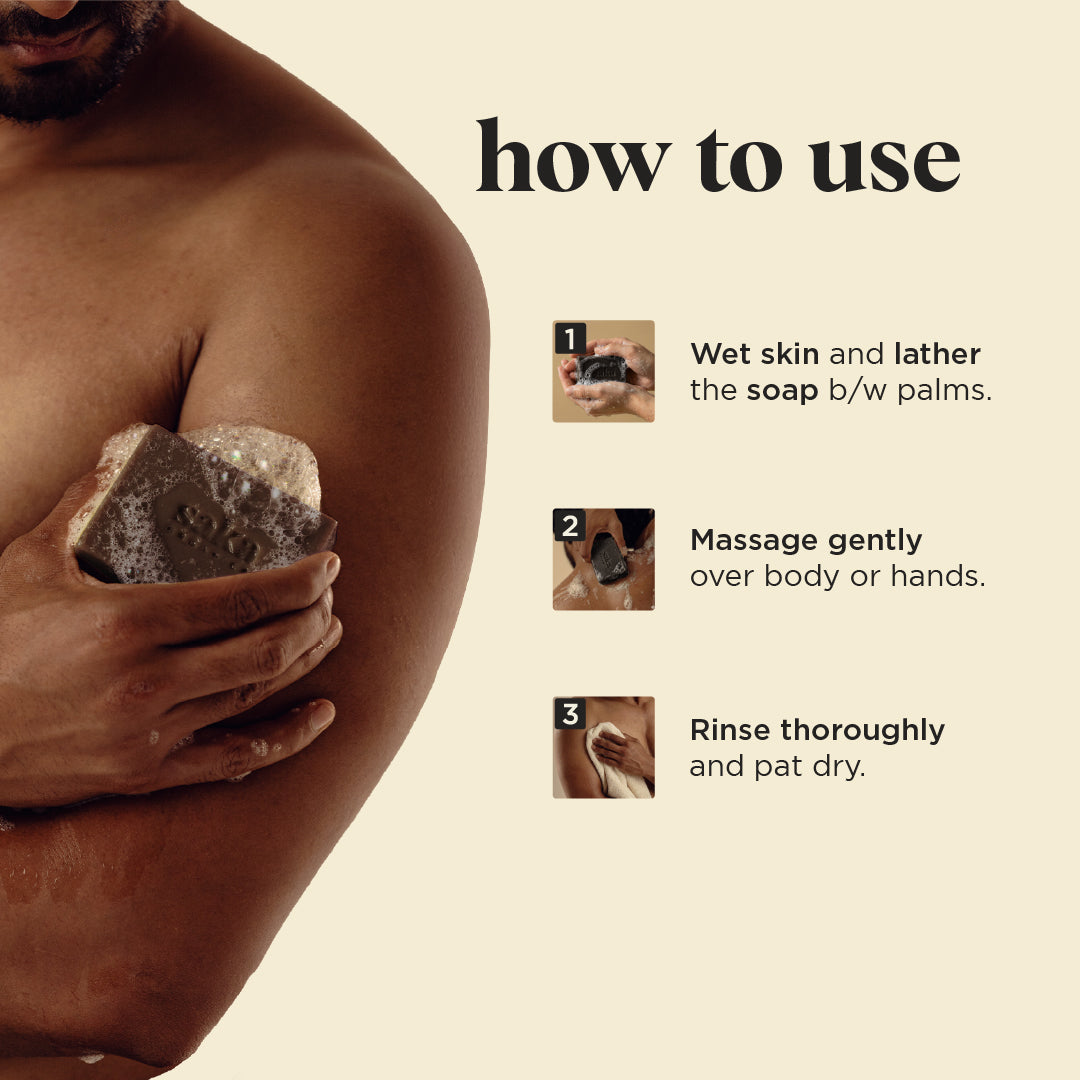
Directions Of Use
End Of Life
Activated Charcoal & Mint Detox Soap
If you have any questions, you are always welcome to contact us. We'll get back to you as soon as possible, within 24 hours on weekdays.
-
Shipping Information
Use this text to answer questions in as much detail as possible for your customers.
-
Customer Support
Use this text to answer questions in as much detail as possible for your customers.
-
FAQ’s
Use this text to answer questions in as much detail as possible for your customers.
-
Contact Us
Use this text to answer questions in as much detail as possible for your customers.
Shop the Feed
FAQs
Please read our T&C page to find out more.
How does activated charcoal work in a bath soap, and does the cleansing mechanism genuinely differ from a conventional soap's approach to removing impurities?
Activated charcoal operates through adsorption - a process where its extraordinarily porous surface (one gram of activated charcoal has a surface area of over 500 square metres) physically binds to impurities, toxins, excess sebum, and environmental pollutants on the skin surface and draws them away when the soap is rinsed off. This is fundamentally different from the mechanism of a conventional soap, which uses surfactant molecules to surround oil particles and lift them from the skin with water. In Springtime Medley as a charcoal bath soap, you effectively get both mechanisms working simultaneously the surfactant base cleanses in the conventional way while the charcoal performs an additional layer of deep-pore drawing and toxin binding. The result is a more thorough clean than either ingredient alone could provide, particularly noticeable for those who live in polluted urban environments where the skin accumulates a heavier burden of environmental particles daily.
What role does mint play alongside charcoal in Springtime Medley, and is this combination suitable as a best bath soap for daily use without being too active for the skin?
Mint brings a completely different set of properties to Springtime Medley that complement charcoal beautifully. While charcoal draws and absorbs, mint's primary compound menthol creates a cooling, vasodilating sensation that stimulates circulation in the skin an invigorating counterpart to charcoal's deep-cleansing action. Menthol also has documented antibacterial properties that support the charcoal's purifying work at the bacterial level of cleansing rather than just the physical. The combined sensory experience the cooling tingle of mint alongside the purifying quality of charcoal creates one of the most genuinely refreshing shower experiences available in a natural bath soap. On the question of daily use: for most skin types, the concentration of activated charcoal in a soap bar is mild enough for daily use. For very dry or sensitive skin, alternating with a more emollient soap on some days is a sensible approach to ensure the charcoal's absorptive action doesn't tip into over-drying.
What makes Springtime Medley a strong contender for the best organic bath soap for urban dwellers dealing with pollution-related skin issues?
Urban skin faces a specific and underappreciated challenge daily exposure to particulate matter, heavy metals, ozone, and nitrogen dioxide from traffic and industrial pollution. These particles are small enough to settle into pores and on the skin surface, where they generate free radicals that break down collagen, accelerate pigmentation, and chronically inflame the skin. A conventional soap may remove surface grime, but it doesn't bind to and extract the finer pollutant particles and toxins the way activated charcoal does. Springtime Medley's charcoal component directly addresses this urban-specific skin burden, making it particularly valuable as a daily cleansing soap in cities. The antioxidant contribution of mint further helps neutralise the free radical damage already done during the day. For anyone commuting in heavy traffic or spending significant time in a polluted environment, this natural bath soap provides a level of daily detoxification that standard soaps simply cannot match.
Does Springtime Medley's charcoal make it look alarming during use, and will it leave any dark residue on skin, towels, or the shower?
The dramatic black colour of a charcoal bath soap is understandably a point of curiosity and mild concern for first-time users. In the shower, the black lather can look striking, but activated charcoal rinses away thoroughly and completely with water. It does not stain the skin, and the skin after rinsing looks and feels noticeably clean rather than tinted. The considerations are more about bathroom surfaces and textiles: rinsing the shower walls and floor after use prevents any residual charcoal from drying and leaving marks on lighter-coloured grout or surfaces, though this is rarely a significant practical issue with a quick rinse. Avoid wiping your face with a white towel while the lather is still present rinse first, then dry. These are minor adjustments in practice, and the overwhelming majority of charcoal soap users find the concerns vastly overstated compared to the cleansing benefits.
How does Springtime Medley compare to charcoal-infused commercial soaps from larger brands, and what does the handmade process preserve that mass production cannot?
The charcoal soap market has grown significantly in recent years, and large commercial brands have responded with charcoal-infused products but there are meaningful differences in what reaches the consumer. Mass-produced charcoal soaps typically use synthetic detergent bases with activated charcoal added as a marketing-driven inclusion, often at concentrations too low to deliver the adsorptive benefits charcoal is known for. They also typically contain the same synthetic preservatives, artificial fragrances, and detergents as their non-charcoal products. Springtime Medley as a handmade natural bath soap is cold-processed meaning the charcoal is incorporated into a genuine soap base (made from saponified plant oils) at a meaningful concentration, alongside mint and botanical ingredients that all serve functional purposes. The retained natural glycerin, the absence of synthetic additives, and the integrity of the botanical formulation make it a categorically different product from a commercial charcoal soap despite appearing similar on the surface.
Let customers speak for us
Just started using it. Smell natural and feels good. yet to realize results. the packing - the bottle, oil dispensing pump and the cap are solid & thoughtfully designed for easy and spill proof usage.

"Premium quality toothbrush"
The packaging is beautiful and the product feels thoughtfully designed. A small change that makes a positive impact.

Premium quality tongue cleaner"
The product feels strong, lightweight, and well-designed. I appreciate the natural material and elegant packaging.

"Love the herbal formula"
I was looking for a natural tooth powder and this one exceeded my expectations. It feels gentle and refreshing.

"Love the Ayurvedic touch"
This tooth powder reminds me of traditional oral care remedies. The ingredients feel natural and gentle for everyday use.

⭐️⭐️⭐️⭐️⭐️
"Beautiful herbal bath powder"
I love using natural skincare products, and this one gives my skin a fresh and smooth feeling without feeling heavy.

"Best hair oil for my routine!"
I have been using this hair oil regularly and my hair feels much softer and healthier. The natural ingredients make it feel gentle and nourishing.
"Relaxing bath experience!"
This bath salt turns my normal bath into a spa-like experience. The natural fragrance feels calming and leaves my body feeling refreshed.

"Loved the coffee fragrance!"
The scrub smells amazing and makes my skin feel super soft after every use. My skin feels fresh, smooth, and hydrated.

Amazing handmade soap with a refreshing eucalyptus and camphor fragrance. It cleanses well, leaves my skin soft and hydrated, and provides a cooling, spa-like feeling after every use. Great quality product and perfect for everyday use. Will definitely purchase again!

This Activated Charcoal & Mint Detox Soap is one of the best handmade soaps I’ve used. It deeply cleanses my skin, removes excess oil, and leaves it feeling fresh and revitalized. The charcoal helps draw out impurities, while the mint provides a cooling and refreshing sensation. Despite its deep-cleansing properties, it doesn’t dry out my skin and keeps it feeling soft and hydrated. The natural ingredients and pleasant mint fragrance make it perfect for daily use. Highly recommended for anyone looking for a refreshing detox soap!

Excellent handmade soap! It leaves my skin clean, soft, and nourished without dryness. The turmeric helps brighten my complexion, while the shea butter keeps my skin moisturized. Great quality product with a pleasant natural scent. Will buy again!

I've avoided hair oils for years because most of them feel too heavy and greasy. This one was surprisingly lightweight and didn't leave my hair looking flat or oily. It's easy to apply, washes out without multiple rounds of shampoo, and feels much more pleasant to use than traditional hair oils.
I wasn't expecting much when I first tried this soap, but it quickly became one of my favourites. It lathers well, has a natural feel to it, and leaves my skin looking refreshed. After a few weeks of regular use, my skin looked clearer and more radiant. Simple, effective, and does exactly what I was hoping for.
Picked up a bunch of products from Saka Organics recently, and the Eucalyptus Soap has been the standout for me. It has a really fresh, clean scent that makes morning showers feel instantly more refreshing. I've also been using their lip balm and tooth powder, and both have exceeded my expectations. What I like most about the brand is that the products feel simple, honest, and effective - nothing unnecessary, just products that work. Will definitely be trying more from their range.