


Lavender Bath Salt – Stress Relief
Quantity:
Pairs well with
Description
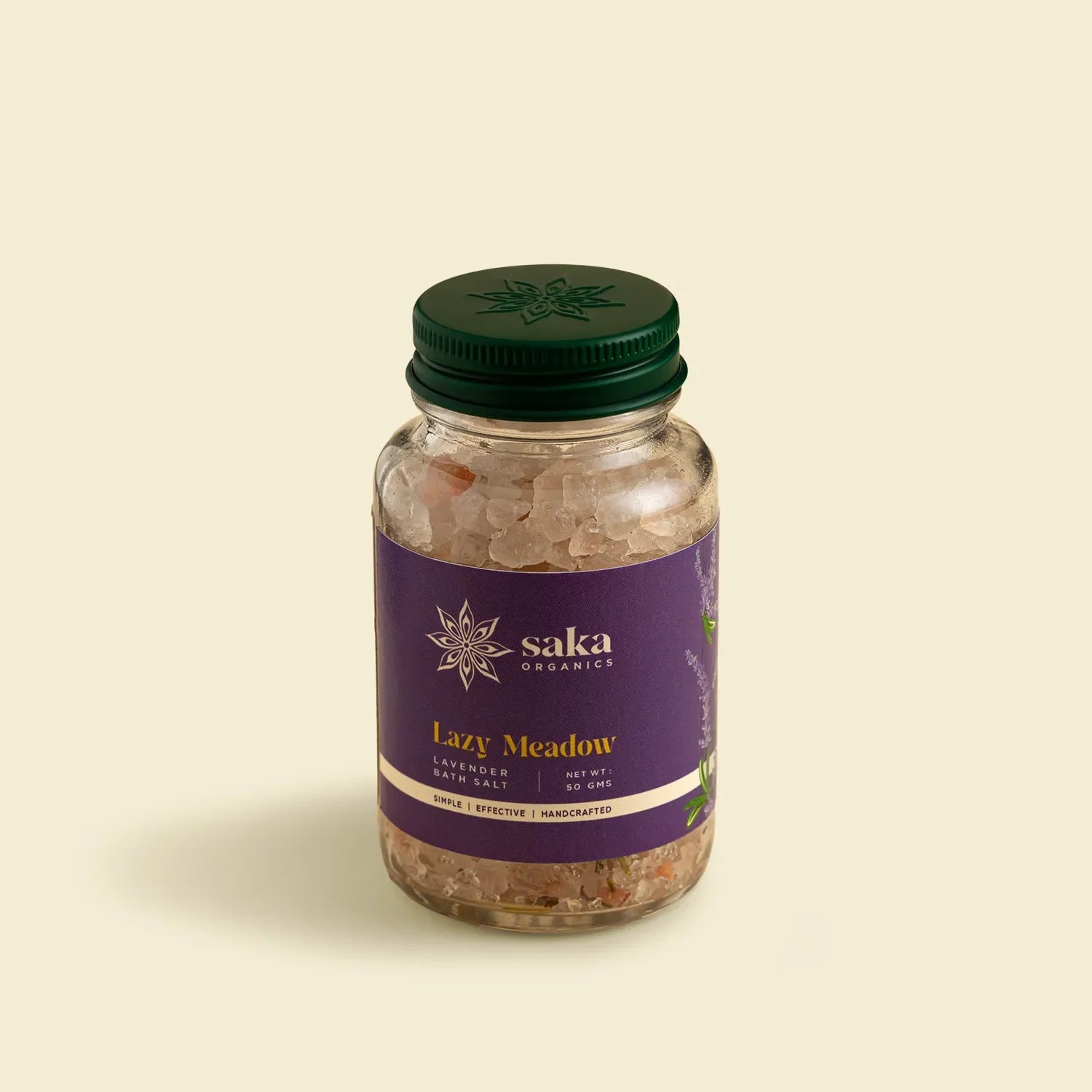
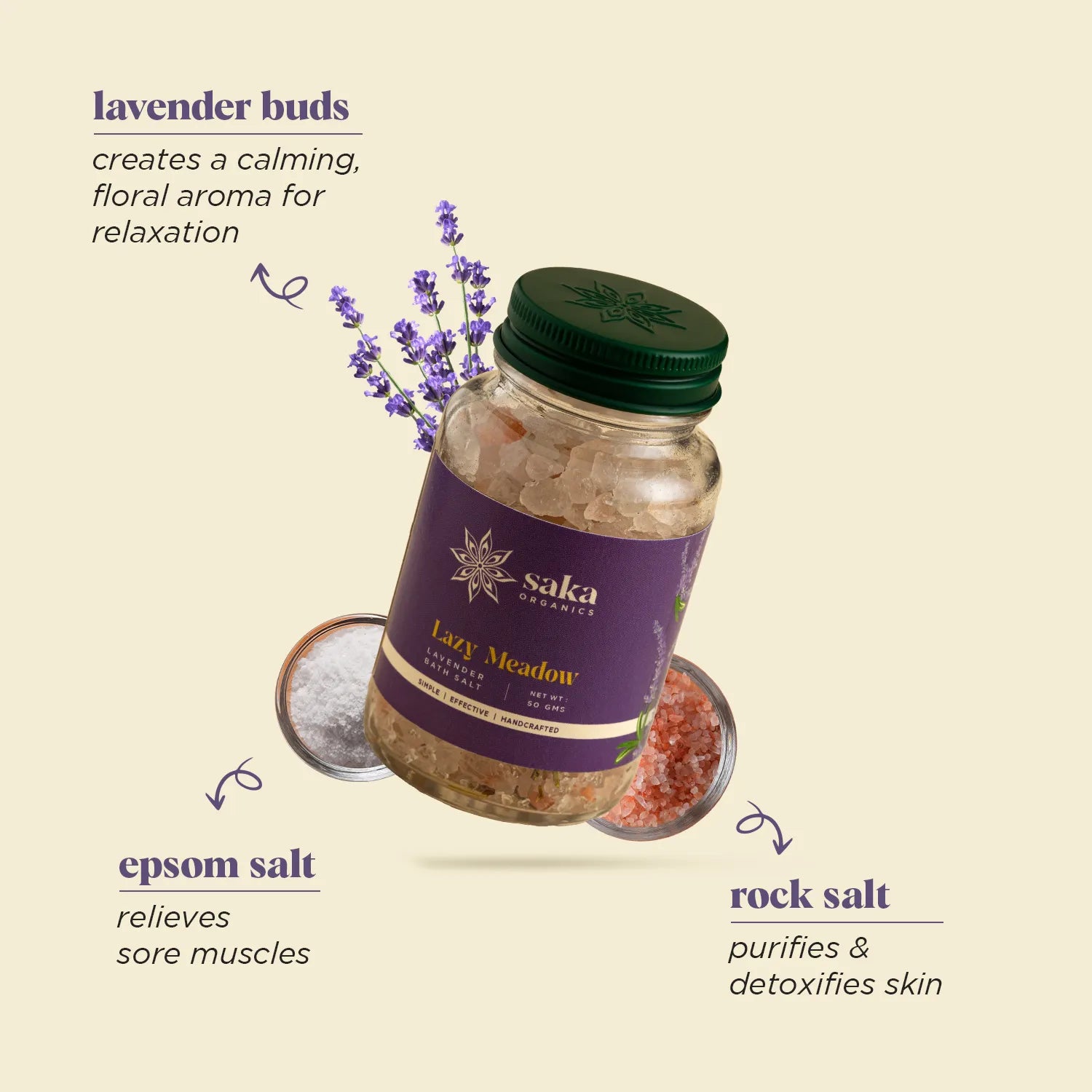
Lazy Meadow is a handcrafted lavender bath salt with rock salt, epsom salt, lavender buds, and lavender essential oil. Four ingredients. Nothing more.
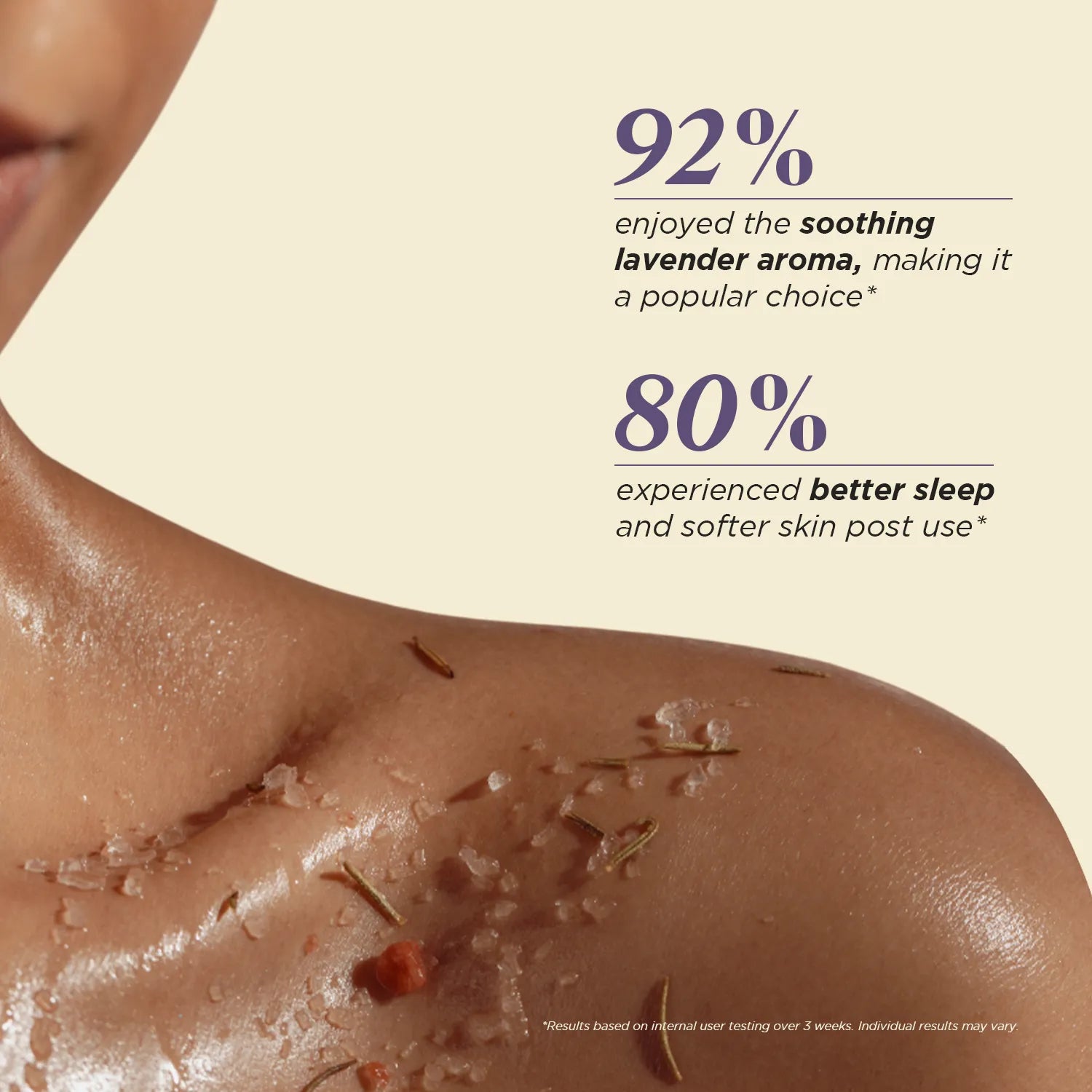
Lavender bath salts benefits include muscle relief from epsom salt and a calming scent from real lavender buds. A gentle, plant-based bath salt, sulphate-free.
What the soak does:
-
Eases muscle tension with epsom salt
-
Calms with lavender buds and essential oil
-
Gently conditions skin with rock salt
✨ Handcrafted with Care | 🌿 Nature-Powered | 💚 Everyday Wellness
Experience the goodness of conscious self-care—add it to your routine today.
Packaging Information
Manufactured by:
SSO Organics Privatet Limited
1-86, Penumarthi, Kakinada, AP-533005.
ML No: AP-17-0008263
Marketed by:
SSO ORGANICS PRIVATE LIMITED
Ground Floor, A & A Lake Front, Durgam Cheruvu Road,
Madhapur, Hyderabad, Rangareddy, Telangana - 500081
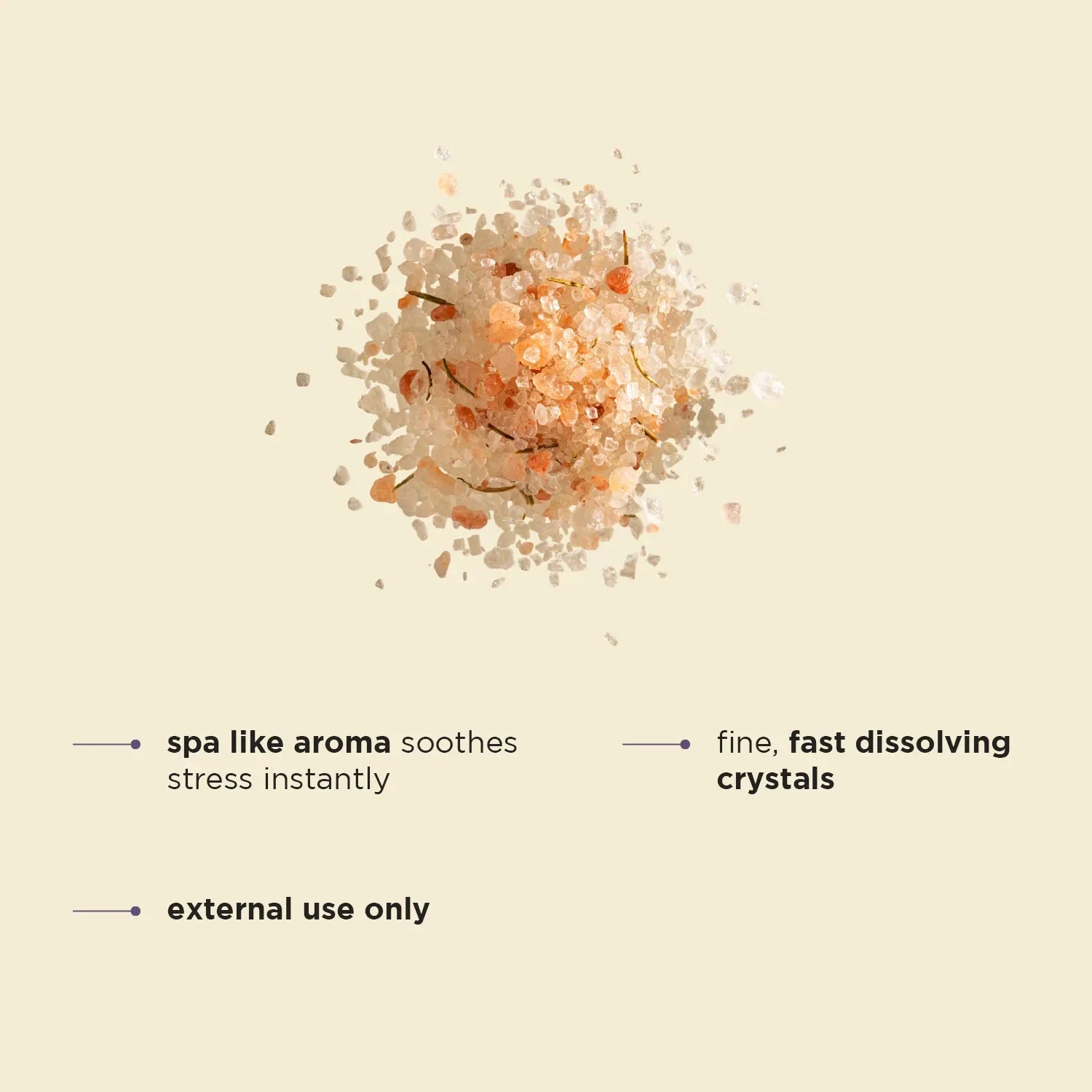
Caution: For external use only.
Storage: Store in a cool and dry place.
Best Before: *12 Months (From Date of Manufacturing)
Country of origin: India
Ingredients
Directions Of Use
End Of Life
Lavender Bath Salt – Stress Relief
If you have any questions, you are always welcome to contact us. We'll get back to you as soon as possible, within 24 hours on weekdays.
-
Shipping Information
Use this text to answer questions in as much detail as possible for your customers.
-
Customer Support
Use this text to answer questions in as much detail as possible for your customers.
-
FAQ’s
Use this text to answer questions in as much detail as possible for your customers.
-
Contact Us
Use this text to answer questions in as much detail as possible for your customers.
Activedayur HG™
Shop the Feed
FAQs
Please read our T&C page to find out more.
What makes Lazy Meadow different from regular bath salts, and is the lavender purely for fragrance or does it serve a functional purpose?
The lavender in Lazy Meadow is far more than a scent choice it's an active ingredient. Lavender essential oil contains linalool and linalyl acetate, compounds with well-documented anxiolytic (anxiety-reducing) and muscle-relaxing properties that are absorbed transdermally during a warm bath. This means the relaxation you feel after a Lazy Meadow soak isn't just the result of warm water and a pleasant smell it's a measurable physiological response. The salt base itself whether Himalayan, Epsom, or Dead Sea contributes magnesium and trace minerals that further support muscle relaxation and help regulate the nervous system. Together, the lavender and mineral salts work synergistically, making Lazy Meadow a genuinely functional recovery and wind-down product rather than just an indulgent one.
What are the specific lavender bath salts benefits for sleep, and is there a right time of day to use Lazy Meadow for maximum effect?
Among the most well-researched lavender bath salts benefits is the positive effect on sleep onset and sleep quality. Lavender has been shown to slow heart rate, lower blood pressure, and shift the nervous system from a sympathetic (alert, stressed) state to a parasympathetic (calm, restorative) one exactly the physiological conditions your body needs to fall asleep naturally. For maximum sleep benefit, use Lazy Meadow 60–90 minutes before you intend to go to bed. The warm bath raises your core body temperature, and the subsequent cooling as you get out triggers a natural sleep signal in the brain. Pair this with the lavender's calming effect and you have a powerful, completely natural sleep ritual. Avoid using it immediately before bed without allowing that cool-down period, as your body temperature needs time to drop.
Can Lazy Meadow lavender bath salts be used for muscle recovery after exercise, and how does a salt bath support physical recovery differently from other post-workout routines?
Yes and this is one of the more underappreciated uses of lavender bath salts. Post-exercise, muscles accumulate lactic acid and experience micro-inflammation that causes the familiar soreness 24–48 hours after a workout. A warm Lazy Meadow soak addresses this through several mechanisms simultaneously. The magnesium in the salt base is absorbed through the skin and plays a direct role in muscle function and recovery many people are mildly deficient in magnesium, which worsens post-exercise cramping and soreness. The warm water increases circulation to fatigued muscles, accelerating the clearance of metabolic waste. And the lavender's anti-inflammatory and analgesic properties add another layer of soothing relief. Compared to foam rolling or cold therapy alone, a bath ritual addresses both the physical and the nervous system fatigue that comes with hard training.
Is Lazy Meadow suitable for sensitive or eczema-prone skin, and are there any precautions to take when using bath salts on compromised skin?
This requires some care. For most people with mildly sensitive skin, a well-formulated lavender bath salt like Lazy Meadow is soothing rather than irritating lavender is one of the gentler essential oils and the mineral salts can actually support the skin barrier. However, for those with active eczema flares, psoriasis, or broken skin, adding salt to a bath can sting and potentially worsen inflammation in compromised areas. The guidance is to use Lazy Meadow during periods of remission rather than during a flare, and to use a lower concentration than suggested start with a smaller amount than directed, see how your skin responds, and build up gradually. After the bath, pat skin dry gently and apply a fragrance-free moisturiser immediately to lock in the hydration before the skin has a chance to dry out completely.
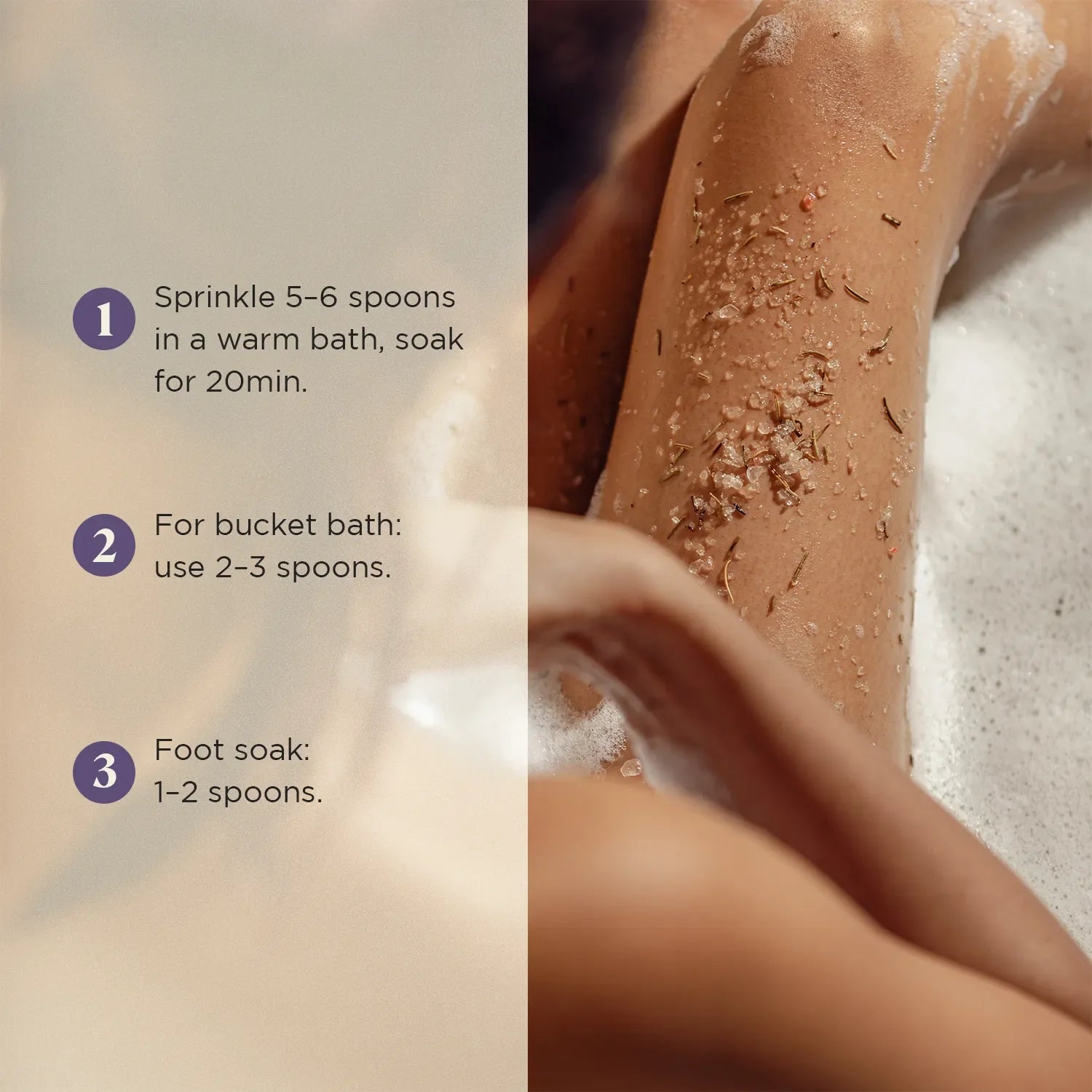
How much Lazy Meadow lavender bath salt should be used per bath, and does more salt mean better results?
More is not always better with bath salts, and this is worth addressing directly. Using significantly more salt than recommended doesn't proportionally increase the benefits beyond a certain concentration, the water becomes hypertonic relative to your skin, which can actually draw moisture out rather than helping the skin absorb minerals. The sweet spot for most bath salts is around 1–2 cups per standard bathtub of warm water, but always follow the specific guidance on Lazy Meadow's packaging. Dissolve the salts in the water before getting in rather than pouring them directly onto the skin. The water temperature also matters it should be warm and comfortable, not scalding. Very hot water strips the skin's natural oils and negates some of the skin-nourishing benefits of the bath, while excessively diluting the essential oil's therapeutic effect.
Let customers speak for us
Just started using it. Smell natural and feels good. yet to realize results. the packing - the bottle, oil dispensing pump and the cap are solid & thoughtfully designed for easy and spill proof usage.

"Premium quality toothbrush"
The packaging is beautiful and the product feels thoughtfully designed. A small change that makes a positive impact.

Premium quality tongue cleaner"
The product feels strong, lightweight, and well-designed. I appreciate the natural material and elegant packaging.

"Love the herbal formula"
I was looking for a natural tooth powder and this one exceeded my expectations. It feels gentle and refreshing.

"Love the Ayurvedic touch"
This tooth powder reminds me of traditional oral care remedies. The ingredients feel natural and gentle for everyday use.

⭐️⭐️⭐️⭐️⭐️
"Beautiful herbal bath powder"
I love using natural skincare products, and this one gives my skin a fresh and smooth feeling without feeling heavy.

"Best hair oil for my routine!"
I have been using this hair oil regularly and my hair feels much softer and healthier. The natural ingredients make it feel gentle and nourishing.
"Relaxing bath experience!"
This bath salt turns my normal bath into a spa-like experience. The natural fragrance feels calming and leaves my body feeling refreshed.

"Loved the coffee fragrance!"
The scrub smells amazing and makes my skin feel super soft after every use. My skin feels fresh, smooth, and hydrated.

Amazing handmade soap with a refreshing eucalyptus and camphor fragrance. It cleanses well, leaves my skin soft and hydrated, and provides a cooling, spa-like feeling after every use. Great quality product and perfect for everyday use. Will definitely purchase again!

This Activated Charcoal & Mint Detox Soap is one of the best handmade soaps I’ve used. It deeply cleanses my skin, removes excess oil, and leaves it feeling fresh and revitalized. The charcoal helps draw out impurities, while the mint provides a cooling and refreshing sensation. Despite its deep-cleansing properties, it doesn’t dry out my skin and keeps it feeling soft and hydrated. The natural ingredients and pleasant mint fragrance make it perfect for daily use. Highly recommended for anyone looking for a refreshing detox soap!

Excellent handmade soap! It leaves my skin clean, soft, and nourished without dryness. The turmeric helps brighten my complexion, while the shea butter keeps my skin moisturized. Great quality product with a pleasant natural scent. Will buy again!

I've avoided hair oils for years because most of them feel too heavy and greasy. This one was surprisingly lightweight and didn't leave my hair looking flat or oily. It's easy to apply, washes out without multiple rounds of shampoo, and feels much more pleasant to use than traditional hair oils.
I wasn't expecting much when I first tried this soap, but it quickly became one of my favourites. It lathers well, has a natural feel to it, and leaves my skin looking refreshed. After a few weeks of regular use, my skin looked clearer and more radiant. Simple, effective, and does exactly what I was hoping for.
Picked up a bunch of products from Saka Organics recently, and the Eucalyptus Soap has been the standout for me. It has a really fresh, clean scent that makes morning showers feel instantly more refreshing. I've also been using their lip balm and tooth powder, and both have exceeded my expectations. What I like most about the brand is that the products feel simple, honest, and effective - nothing unnecessary, just products that work. Will definitely be trying more from their range.