

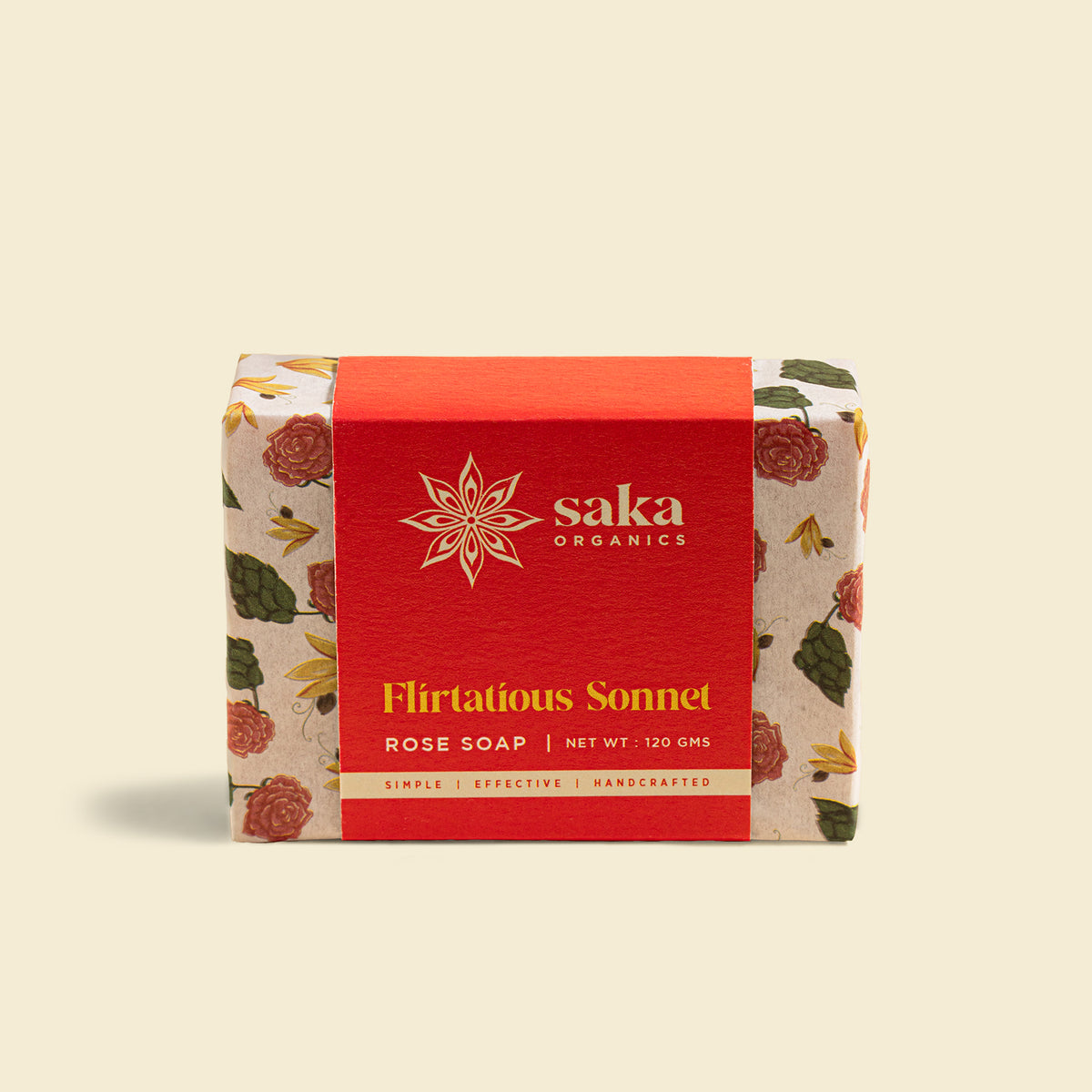
Rose & Shea Butter Moisturising Soap
Quantity:
Pairs well with
Description
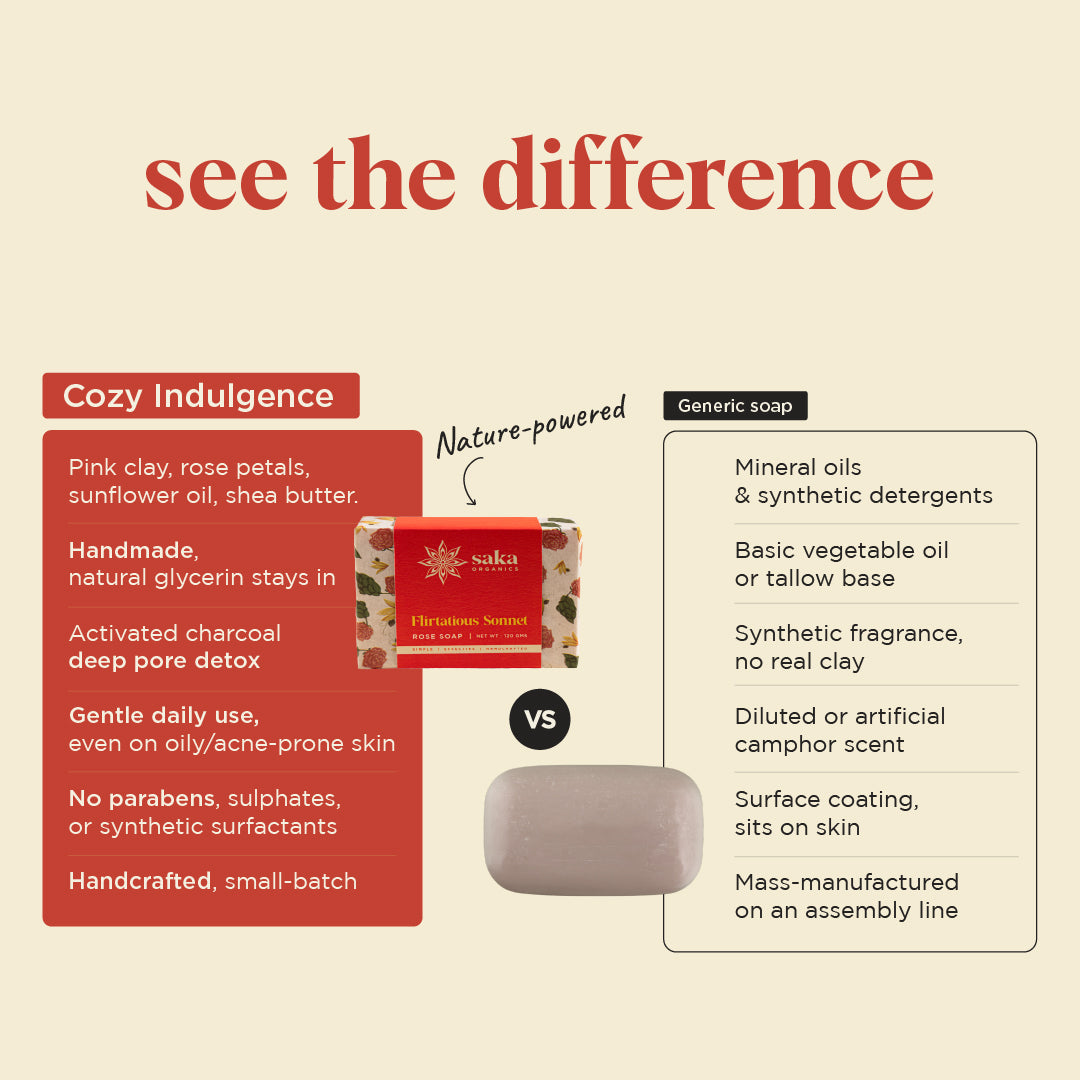
Meet Flirtatious Sonnet — a luxurious handmade organic soap India lovers of natural skincare will adore. Crafted with rose essential oil, shea butter, pink clay, and red clay, this handcrafted bar is your daily ritual for soft, glowing skin.
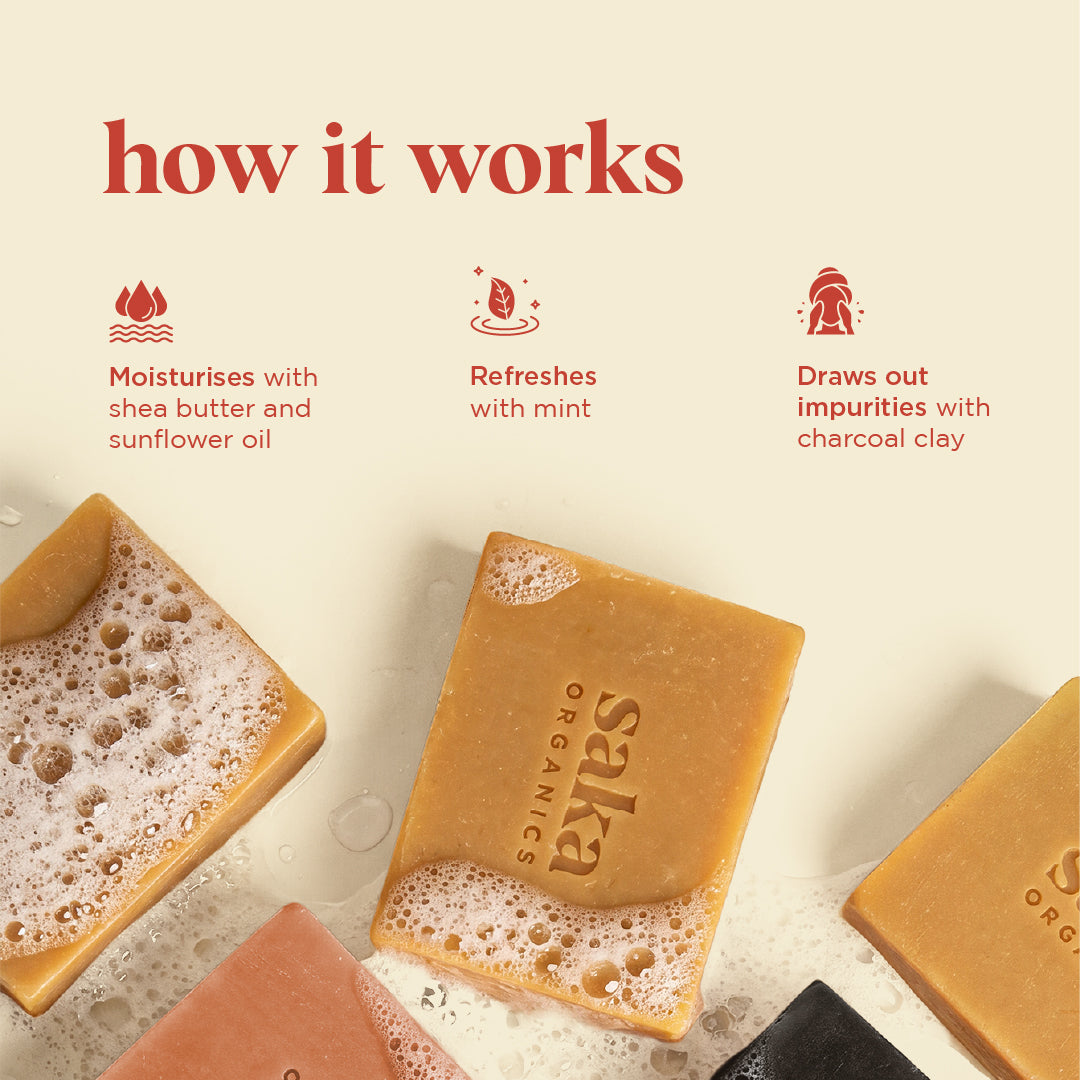
Each bar is cold-process made in small batches, free from sulphates, parabens, and synthetic fragrances. The red and pink clays gently draw out impurities while shea butter deeply nourishes — leaving skin feeling velvety, not stripped.
Key Ingredients
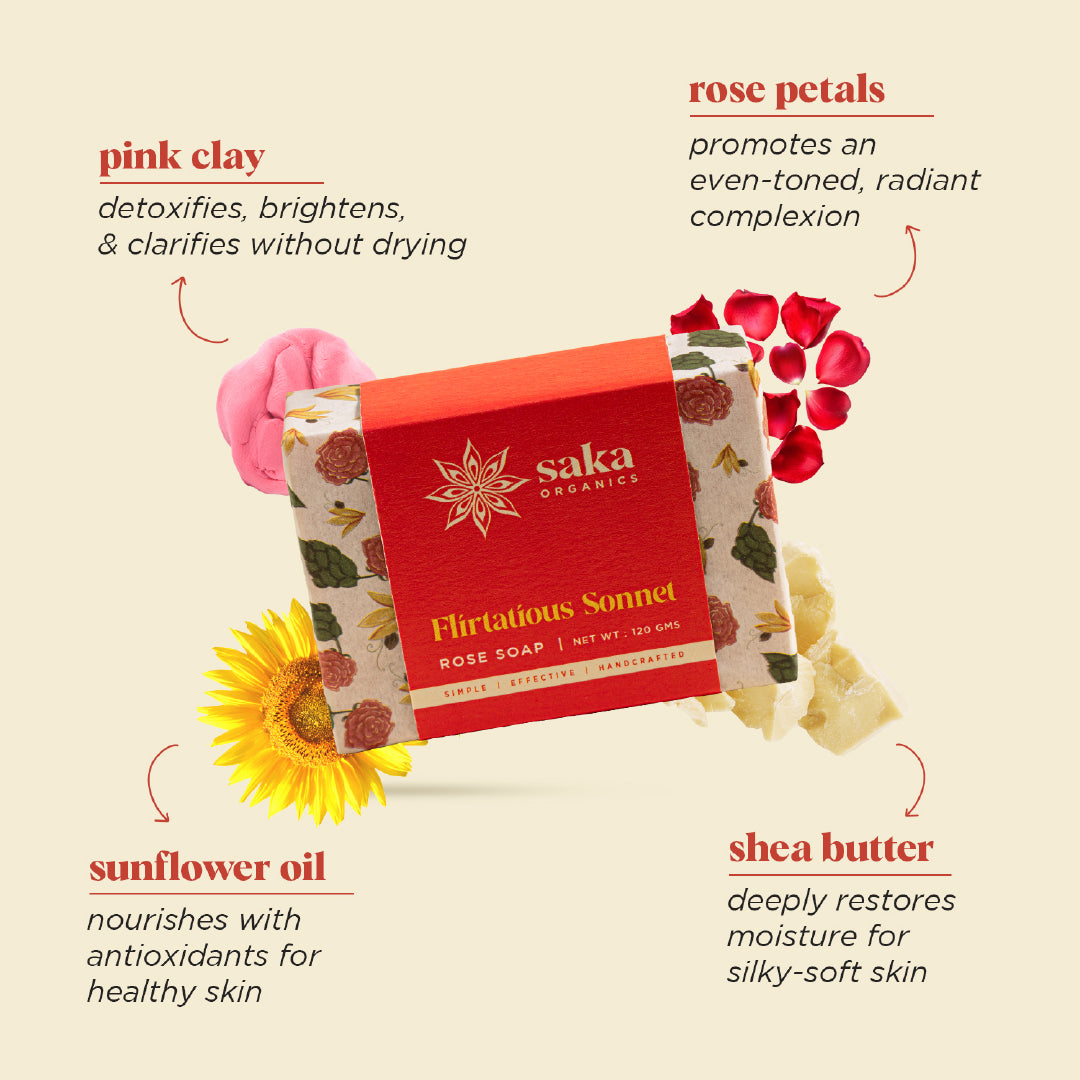
- Rose Essential Oil – Soothes and adds a soft, lingering floral scent
- Shea Butter – Intensely moisturises and softens dry skin
- Pink & Red Clay – Gently cleanses and detoxifies pores
- Rice Bran, Coconut & Sunflower Oil – Nourishing plant-based oils for a creamy lather
Who Is It For?
Perfect for dry, sensitive, or dull skin. Ideal as a natural moisturising soap for women who want a spa-like experience at home.
How to Use
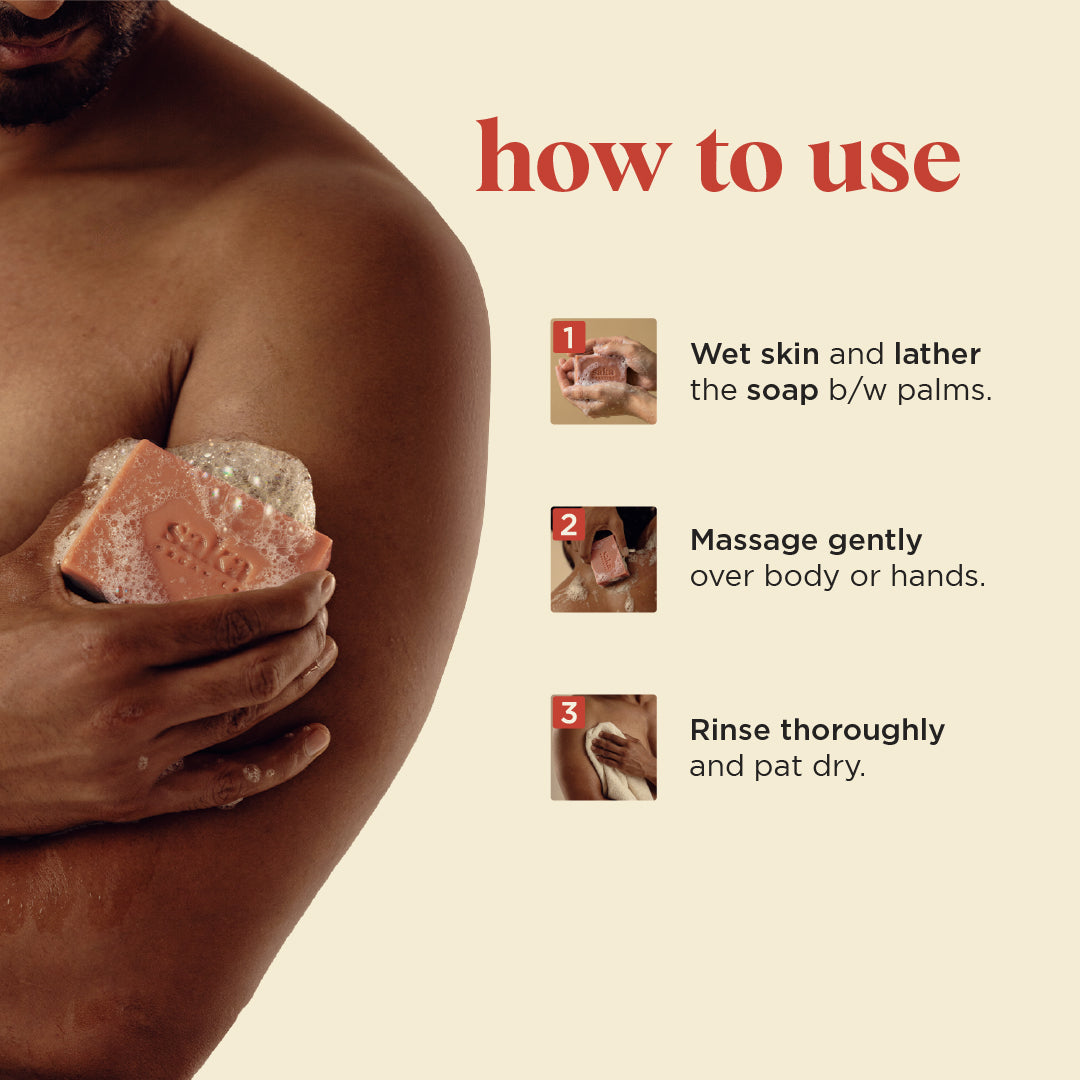
Lather between palms or on a loofah and massage gently onto wet skin. Rinse thoroughly. Use daily for best results.
Packaging Information
Manufactured by:
SSO Organics Privatet Limited
1-86, Penumarthi, Kakinada, AP-533005.
ML No: AP-17-0008263
Marketed by:
SSO ORGANICS PRIVATE LIMITED
Ground Floor, A & A Lake Front, Durgam Cheruvu Road,
Madhapur, Hyderabad, Rangareddy, Telangana - 500081
Caution: For external use only.
Storage: Store in a cool and dry place.
Best Before: *12 Months (From Date of Manufacturing)
Country of origin: India
Ingredients
Directions Of Use
End Of Life
Rose & Shea Butter Moisturising Soap
If you have any questions, you are always welcome to contact us. We'll get back to you as soon as possible, within 24 hours on weekdays.
-
Shipping Information
Use this text to answer questions in as much detail as possible for your customers.
-
Customer Support
Use this text to answer questions in as much detail as possible for your customers.
-
FAQ’s
Use this text to answer questions in as much detail as possible for your customers.
-
Contact Us
Use this text to answer questions in as much detail as possible for your customers.
Shop the Feed
FAQs
Please read our T&C page to find out more.
What makes rose a genuinely active skincare ingredient in Flirtatious Sonnet, rather than just a romantic scent choice?
Rose is one of the most extensively studied botanicals in skin care, and its inclusion in Flirtatious Sonnet goes well beyond its iconic fragrance. Rose petals and rose-derived extracts contain flavonoids, vitamin C, tannins, and a range of phenolic compounds with documented antioxidant, anti-inflammatory, and antimicrobial properties. Rose water a common component of rose-based formulations has a pH very close to the skin's own natural pH, making it inherently compatible with and supportive of the skin's acid mantle. The tannins in rose have a mild astringent effect that helps tighten and refine pores, while the anti-inflammatory compounds soothe redness and irritation. In a natural handmade soap format like Flirtatious Sonnet, these properties are preserved through careful cold-process production, delivering a bar that actively benefits the skin's health and appearance rather than simply making the shower experience more pleasant.
How effective is Flirtatious Sonnet as a skin whitening handmade soap, and what mechanisms make rose-based soaps particularly suited to addressing pigmentation and dullness?
Rose's skin brightening action works through several complementary pathways that make it one of the more nuanced natural ingredients for addressing pigmentation. The vitamin C content of rose petals inhibits tyrosinase the melanin-producing enzyme contributing to a gradual reduction in pigmentation from sun damage, hormonal changes, or post-inflammatory marks. The antioxidant flavonoids neutralise the free radical activity that drives oxidative pigmentation, while the gentle exfoliating effect of regular use removes the surface layer of dull, dead cells that makes uneven skin tone most visible. As a skin whitening handmade soap, Flirtatious Sonnet delivers these benefits cumulatively with daily use the brightening is progressive and natural-looking, working with the skin's own renewal cycle rather than applying chemical bleaching agents. The result is a more even, luminous complexion that improves steadily over 6–10 weeks of consistent use.
Is Flirtatious Sonnet suitable as a daily use rose handmade soap for all skin types, including oily, dry, and mature skin?
One of rose's most notable qualities as a skincare ingredient is its unusual versatility across skin types it is simultaneously moisturising enough for dry skin and astringent enough to benefit oily skin, which is relatively rare in a single natural ingredient. For dry and mature skin, the emollient plant oils in Flirtatious Sonnet's handmade soap base combined with rose's hydrating properties make it deeply nourishing leaving skin soft rather than tight after washing. For oily and combination skin, the tannins in rose help regulate sebum and refine enlarged pores, while the antibacterial properties reduce the bacterial burden that contributes to congestion. For mature skin specifically, rose's potent antioxidant activity is particularly valuable, as it counteracts the oxidative stress that accelerates skin ageing. Across all these types, the retained glycerin in the handmade soap base ensures the skin is never stripped, making it appropriate for daily use without restriction.
What is the difference between a soap made with rose essential oil versus one made with rose water or rose petal powder, and which form does Flirtatious Sonnet use?
This is a nuanced but important distinction for anyone who takes their natural handmade soap formulations seriously. Rose essential oil properly called rose otto is extraordinarily expensive because it takes thousands of kilograms of petals to produce a small quantity of oil. A soap genuinely made with rose otto at a therapeutic concentration would be priced far above most market offerings. Rose absolute is slightly more accessible but still costly. Rose water, by contrast, is produced through steam distillation of rose petals and retains many of the skin-beneficial hydrophilic (water-soluble) compounds of the plant. Rose petal powder provides physical exfoliation alongside the botanical actives. A transparently labelled natural handmade soap like Flirtatious Sonnet should specify which rose-derived ingredient it uses and understanding this distinction helps consumers evaluate whether the product's pricing and claims align with its actual formulation.
How does the scent of Flirtatious Sonnet's natural rose handmade soap compare to rose-fragranced commercial soaps, and why does the source of the scent matter?
The difference between a soap scented with natural rose-derived ingredients and one fragranced with synthetic rose fragrance oil is immediately apparent to anyone who has experienced both. Synthetic rose fragrance used in the vast majority of commercially available rose soaps captures the broad aromatic impression of rose but lacks the depth, complexity, and the dozens of minor aromatic compounds that make real rose scent distinctive and evolving. Natural rose also behaves differently on the skin it interacts with individual body chemistry in a way that synthetic fragrance doesn't, meaning the scent of Flirtatious Sonnet develops subtly on the skin after the shower rather than simply dissipating as the product rinses away. Beyond the sensory difference, synthetic fragrance is one of the most common causes of contact dermatitis and skin sensitivity reactions. Natural rose-derived scent carries none of these concerns, making Flirtatious Sonnet not just more pleasant but meaningfully safer for daily skin contact.
Let customers speak for us
Just started using it. Smell natural and feels good. yet to realize results. the packing - the bottle, oil dispensing pump and the cap are solid & thoughtfully designed for easy and spill proof usage.

"Premium quality toothbrush"
The packaging is beautiful and the product feels thoughtfully designed. A small change that makes a positive impact.

Premium quality tongue cleaner"
The product feels strong, lightweight, and well-designed. I appreciate the natural material and elegant packaging.

"Love the herbal formula"
I was looking for a natural tooth powder and this one exceeded my expectations. It feels gentle and refreshing.

"Love the Ayurvedic touch"
This tooth powder reminds me of traditional oral care remedies. The ingredients feel natural and gentle for everyday use.

⭐️⭐️⭐️⭐️⭐️
"Beautiful herbal bath powder"
I love using natural skincare products, and this one gives my skin a fresh and smooth feeling without feeling heavy.

"Best hair oil for my routine!"
I have been using this hair oil regularly and my hair feels much softer and healthier. The natural ingredients make it feel gentle and nourishing.
"Relaxing bath experience!"
This bath salt turns my normal bath into a spa-like experience. The natural fragrance feels calming and leaves my body feeling refreshed.

"Loved the coffee fragrance!"
The scrub smells amazing and makes my skin feel super soft after every use. My skin feels fresh, smooth, and hydrated.

Amazing handmade soap with a refreshing eucalyptus and camphor fragrance. It cleanses well, leaves my skin soft and hydrated, and provides a cooling, spa-like feeling after every use. Great quality product and perfect for everyday use. Will definitely purchase again!

This Activated Charcoal & Mint Detox Soap is one of the best handmade soaps I’ve used. It deeply cleanses my skin, removes excess oil, and leaves it feeling fresh and revitalized. The charcoal helps draw out impurities, while the mint provides a cooling and refreshing sensation. Despite its deep-cleansing properties, it doesn’t dry out my skin and keeps it feeling soft and hydrated. The natural ingredients and pleasant mint fragrance make it perfect for daily use. Highly recommended for anyone looking for a refreshing detox soap!

Excellent handmade soap! It leaves my skin clean, soft, and nourished without dryness. The turmeric helps brighten my complexion, while the shea butter keeps my skin moisturized. Great quality product with a pleasant natural scent. Will buy again!

I've avoided hair oils for years because most of them feel too heavy and greasy. This one was surprisingly lightweight and didn't leave my hair looking flat or oily. It's easy to apply, washes out without multiple rounds of shampoo, and feels much more pleasant to use than traditional hair oils.
I wasn't expecting much when I first tried this soap, but it quickly became one of my favourites. It lathers well, has a natural feel to it, and leaves my skin looking refreshed. After a few weeks of regular use, my skin looked clearer and more radiant. Simple, effective, and does exactly what I was hoping for.
Picked up a bunch of products from Saka Organics recently, and the Eucalyptus Soap has been the standout for me. It has a really fresh, clean scent that makes morning showers feel instantly more refreshing. I've also been using their lip balm and tooth powder, and both have exceeded my expectations. What I like most about the brand is that the products feel simple, honest, and effective - nothing unnecessary, just products that work. Will definitely be trying more from their range.