

Mosquito Repellent – Safe for Skin
Quantity:
- Size:
- 10 ml
Pairs well with
Description
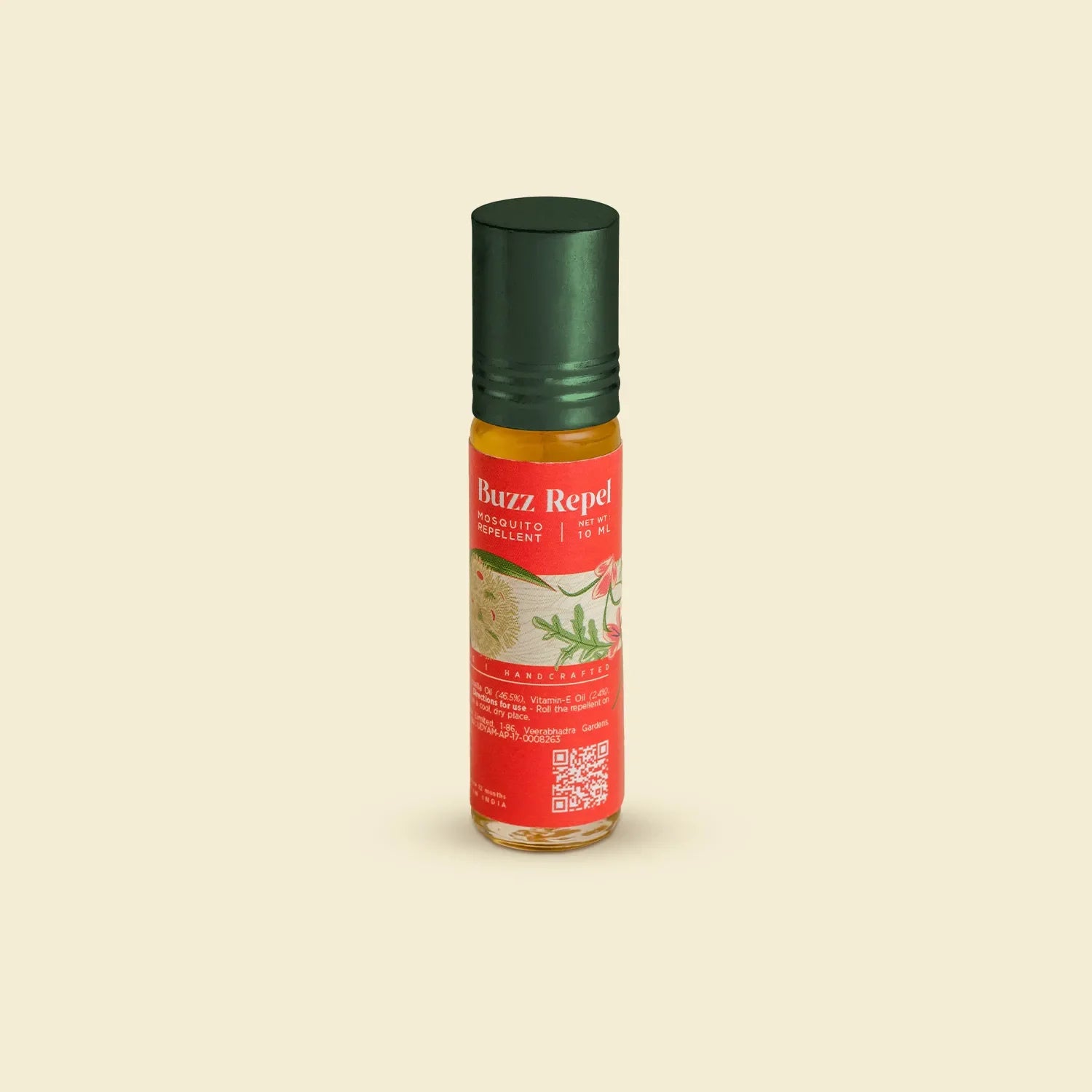
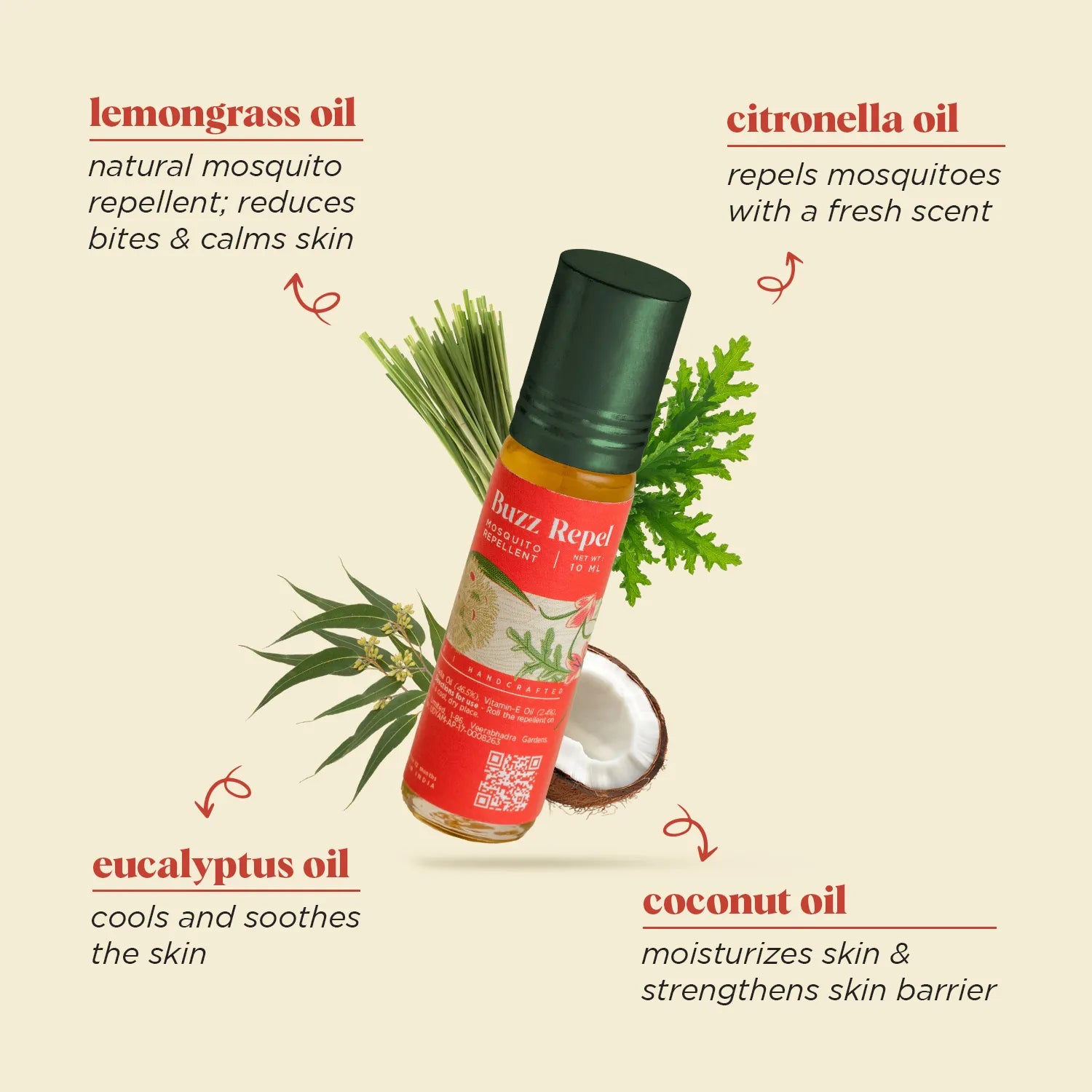
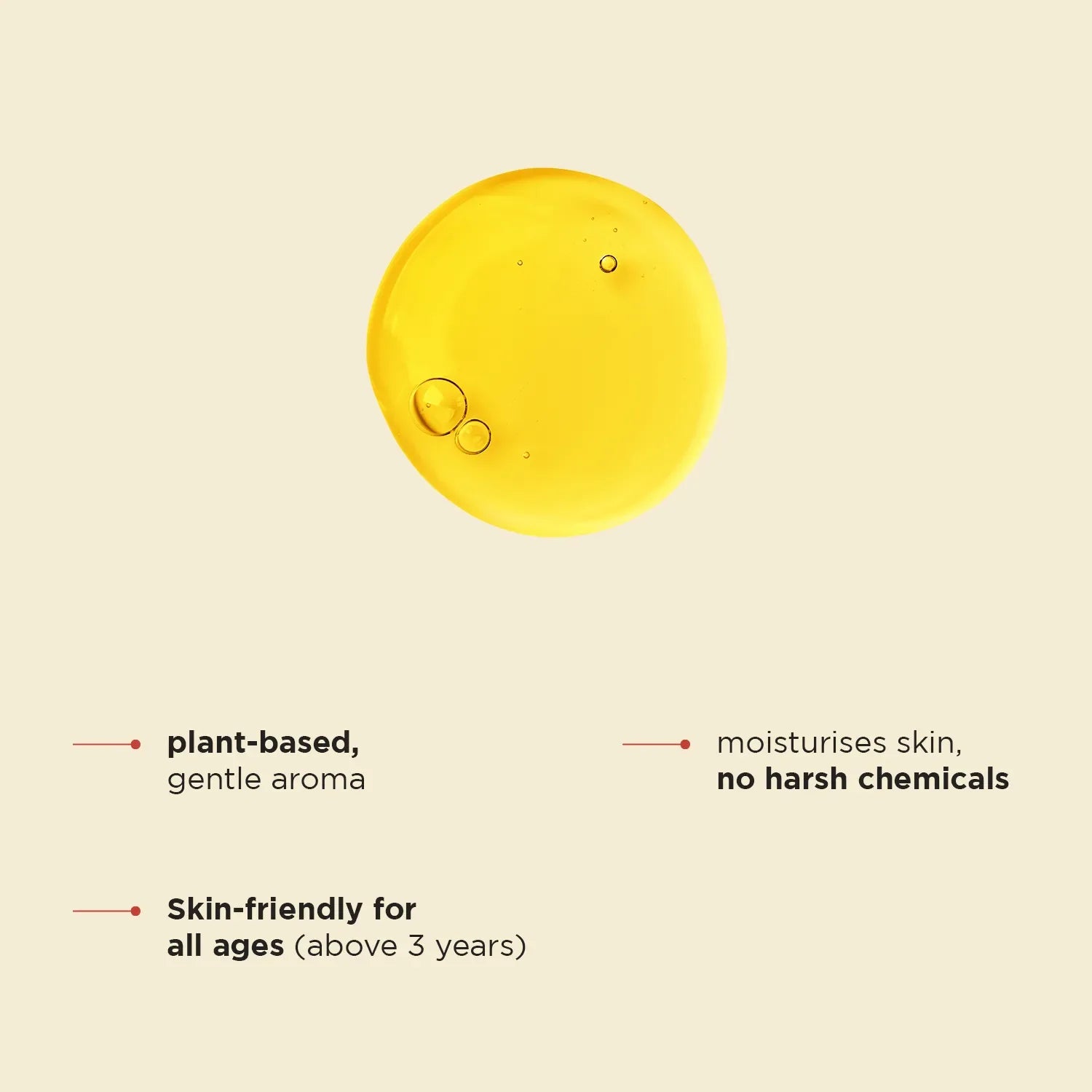
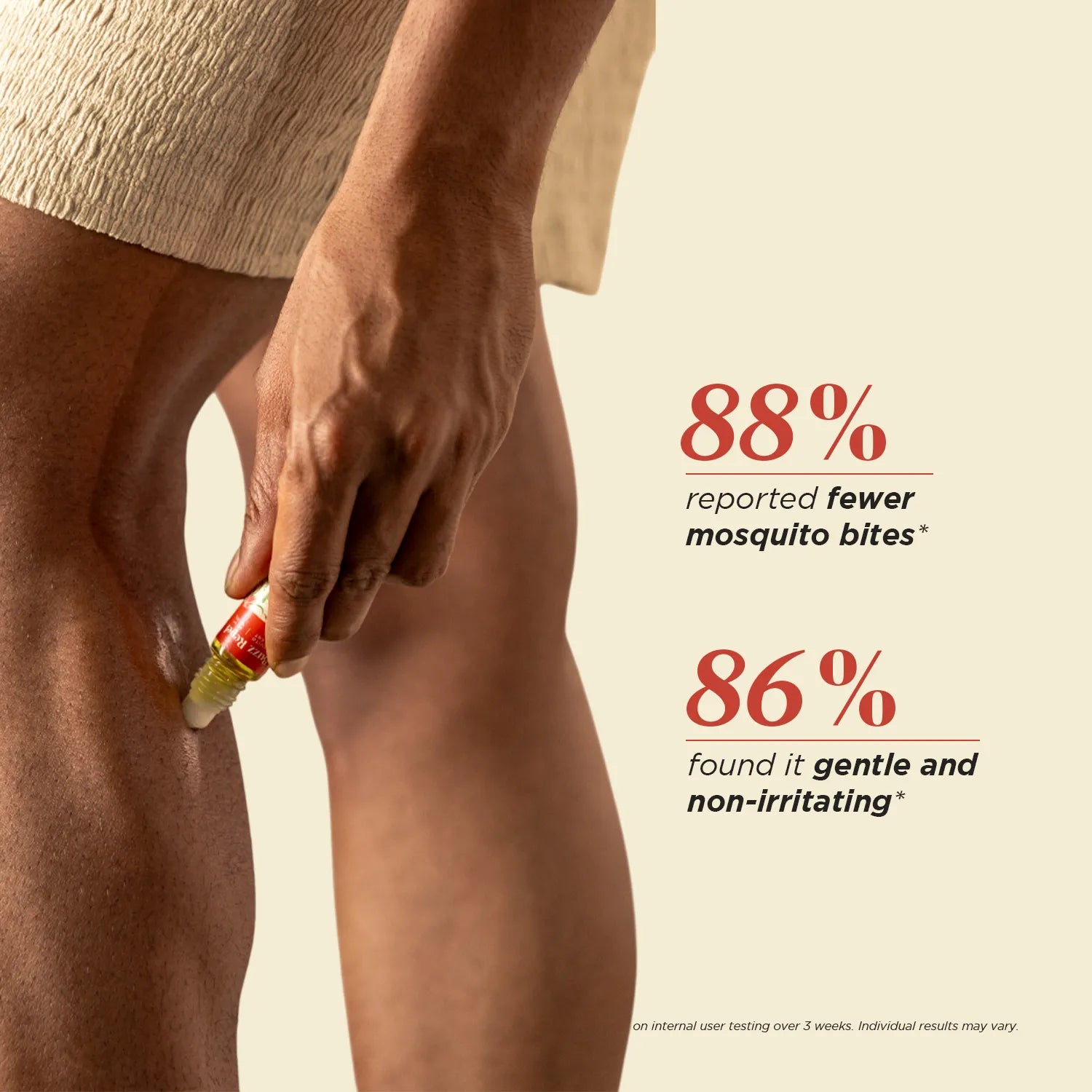
Buzz Repel is a handcrafted natural mosquito repellent with coconut oil, citronella oil, lemongrass oil, eucalyptus oil, and vitamin E. Free from synthetic chemicals.
A plant-based mosquito repellent in place of a conventional mosquito repellent cream, it uses citronella and lemongrass, with eucalyptus and vitamin E rounding out the formula.
What the formula does:
-
Repels insects with citronella and lemongrass oil
-
Soothes and moisturizes with coconut oil
-
Antioxidant support with vitamin E
✨ Handcrafted with Care | 🌿 Nature-Powered | 💚 Everyday Wellness
Experience the goodness of conscious self-care—add it to your routine today.
Packaging Information
Manufactured by:
SSO Organics Privatet Limited
1-86, Penumarthi, Kakinada, AP-533005.
ML No: AP-17-0008263
Marketed by:
SSO ORGANICS PRIVATE LIMITED
Ground Floor, A & A Lake Front, Durgam Cheruvu Road,
Madhapur, Hyderabad, Rangareddy, Telangana - 500081
Caution: For external use only.
Storage: Store in a cool and dry place.
Best Before: *12 Months (From Date of Manufacturing)
Country of origin: India
Ingredients
Directions Of Use
End Of Life
If you have any questions, you are always welcome to contact us. We'll get back to you as soon as possible, within 24 hours on weekdays.
-
Shipping Information
Use this text to answer questions in as much detail as possible for your customers.
-
Customer Support
Use this text to answer questions in as much detail as possible for your customers.
-
FAQ’s
Use this text to answer questions in as much detail as possible for your customers.
-
Contact Us
Use this text to answer questions in as much detail as possible for your customers.
Shop the Feed
FAQs
Please read our T&C page to find out more.
How does Buzz Repel work as a natural mosquito repellent, and is plant-based repellency actually as effective as DEET-based products?
DEET (N,N-diethyl-meta-toluamide) has long been the benchmark for mosquito repellency, but it comes with real trade-offs it's a potent chemical that can degrade plastics, cause skin irritation with repeated use, and is not recommended for young children in significant concentrations. Buzz Repel works through a different mechanism: rather than chemically disrupting a mosquito's sensory receptors the way DEET does, natural repellents use plant-derived volatile compounds like those found in citronella, eucalyptus, neem, or lemongrass that mosquitoes find strongly aversive and that mask the human odour cues (CO₂, lactic acid, body heat) that attract them. The honest answer on efficacy is that DEET outperforms natural repellents in duration and in high-mosquito-density environments. However, for everyday urban use, outdoor activities, and use on children or sensitive skin, a well-formulated natural mosquito repellent like Buzz Repel offers meaningful protection without the chemical load.
What is the difference between using Buzz Repel as a mosquito repellent cream versus a spray, and what makes the cream format preferable for certain situations?
Spray repellents are convenient for quick, wide-area application but have notable downsides they're easily inhaled during application, can be inconsistently distributed on the skin, and tend to evaporate faster, requiring more frequent reapplication. A mosquito repellent cream like Buzz Repel has several practical advantages. The cream base allows for more controlled, even application and typically contains emollient ingredients that keep the repellent in contact with the skin for longer, extending its effectiveness. It's also far more suitable for use on children, where you want to be precise about where the product is applied and avoid any inhalation risk entirely. The cream format also doubles as a skin moisturiser in many natural formulations, making it more comfortable to wear for extended periods than alcohol-based sprays, which can dry out the skin.
How long does Buzz Repel's protection last, and how often should it be reapplied for reliable coverage?
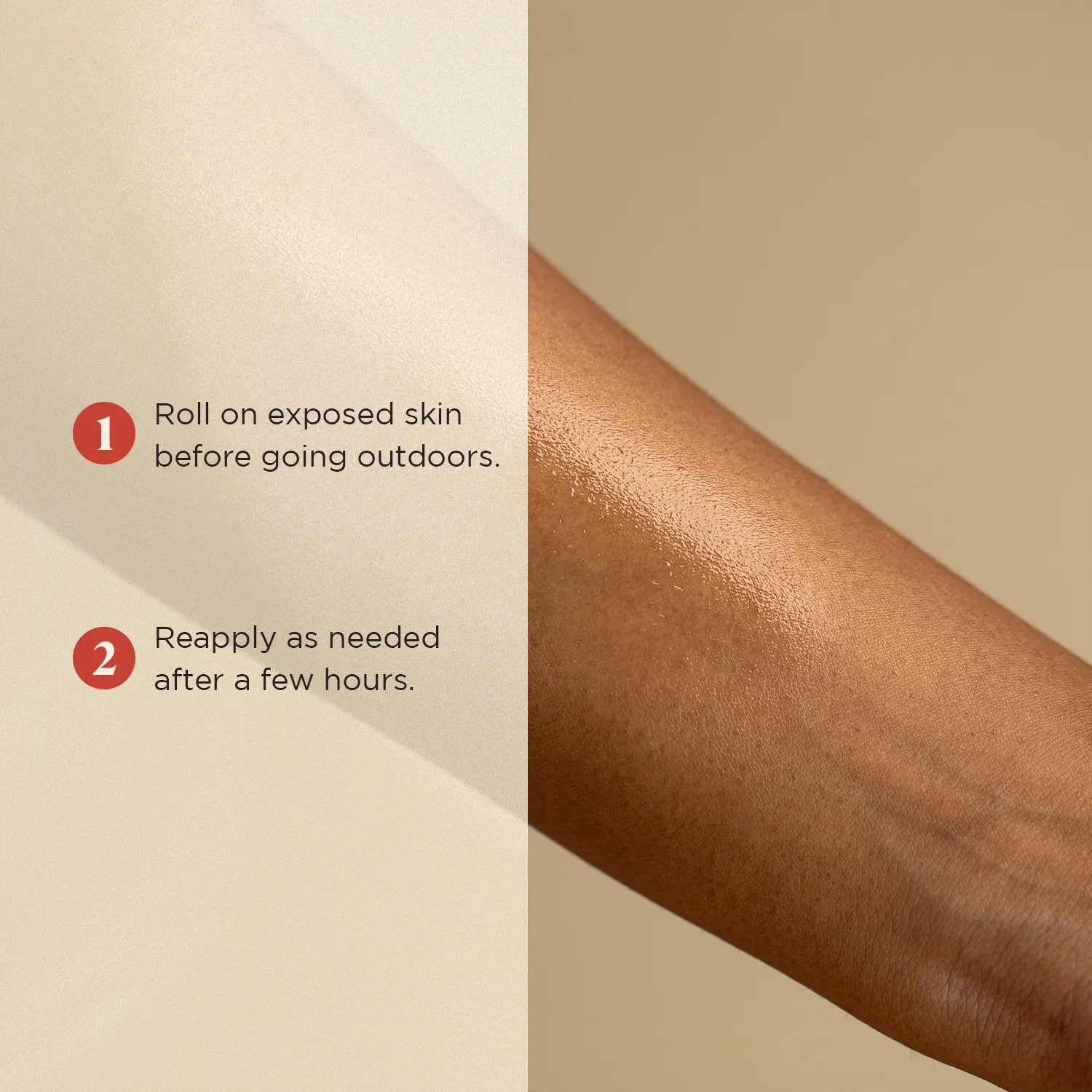
Natural mosquito repellents generally require more frequent reapplication than DEET-based products, and being upfront about this is important. Buzz Repel's protection window is typically 2–3 hours under normal conditions, though this can vary based on physical activity level (sweating reduces efficacy), humidity, and the intensity of mosquito activity in your environment. Reapply after swimming or heavy sweating regardless of time elapsed. For evening outdoor activities when mosquito activity peaks apply Buzz Repel 10–15 minutes before going outside to allow it to fully absorb and activate, then reapply mid-evening if you're outdoors for an extended period. Keep covered skin in mind too repellents only protect the areas they're applied to, so pairing Buzz Repel with light, full-coverage clothing in high-exposure situations adds another layer of protection.
Is Buzz Repel safe for children and pregnant women, and are there any restrictions on who should use a natural mosquito repellent?
One of the key advantages of a natural mosquito repellent formulated without DEET, picaridin, or synthetic pyrethroids is its broader suitability across sensitive groups. Buzz Repel is generally considered safe for children above a certain age and for use during pregnancy, but the specific age threshold and ingredient profile should be verified on the product label, as some essential oils (such as eucalyptus-based compounds) are not recommended for children under 3. For pregnant women, the general guidance is to avoid concentrated essential oils during the first trimester and to consult a healthcare provider before using any new topical product. Apply to clothing or exposed areas rather than directly over the abdomen as an additional precaution. Compared to DEET, however, a well-formulated natural repellent carries significantly lower chemical risk for these groups.
Can Buzz Repel be used alongside sunscreen, and is there a correct order for applying the two products?
Yes and this is a genuinely practical question for anyone spending time outdoors. The correct order is sunscreen first, mosquito repellent second. Sunscreen needs to be applied directly to the skin and absorbed before anything is layered on top, as applying repellent underneath can interfere with the sunscreen's UV-filtering film. Wait a few minutes after applying sunscreen for it to absorb, then apply Buzz Repel over the top. One important caveat: some chemical sunscreen ingredients and repellent compounds can interact and reduce the efficacy of both products when mixed another reason why cream-format repellents like Buzz Repel are preferable to sprays in this context, as they can be applied more precisely and layered more cleanly. Avoid combination sunscreen-repellent products, as the reapplication schedule for each differs and you end up over-applying one or under-applying the other.
Let customers speak for us
Just started using it. Smell natural and feels good. yet to realize results. the packing - the bottle, oil dispensing pump and the cap are solid & thoughtfully designed for easy and spill proof usage.

"Premium quality toothbrush"
The packaging is beautiful and the product feels thoughtfully designed. A small change that makes a positive impact.

Premium quality tongue cleaner"
The product feels strong, lightweight, and well-designed. I appreciate the natural material and elegant packaging.

"Love the herbal formula"
I was looking for a natural tooth powder and this one exceeded my expectations. It feels gentle and refreshing.

"Love the Ayurvedic touch"
This tooth powder reminds me of traditional oral care remedies. The ingredients feel natural and gentle for everyday use.

⭐️⭐️⭐️⭐️⭐️
"Beautiful herbal bath powder"
I love using natural skincare products, and this one gives my skin a fresh and smooth feeling without feeling heavy.

"Best hair oil for my routine!"
I have been using this hair oil regularly and my hair feels much softer and healthier. The natural ingredients make it feel gentle and nourishing.
"Relaxing bath experience!"
This bath salt turns my normal bath into a spa-like experience. The natural fragrance feels calming and leaves my body feeling refreshed.

"Loved the coffee fragrance!"
The scrub smells amazing and makes my skin feel super soft after every use. My skin feels fresh, smooth, and hydrated.

Amazing handmade soap with a refreshing eucalyptus and camphor fragrance. It cleanses well, leaves my skin soft and hydrated, and provides a cooling, spa-like feeling after every use. Great quality product and perfect for everyday use. Will definitely purchase again!

This Activated Charcoal & Mint Detox Soap is one of the best handmade soaps I’ve used. It deeply cleanses my skin, removes excess oil, and leaves it feeling fresh and revitalized. The charcoal helps draw out impurities, while the mint provides a cooling and refreshing sensation. Despite its deep-cleansing properties, it doesn’t dry out my skin and keeps it feeling soft and hydrated. The natural ingredients and pleasant mint fragrance make it perfect for daily use. Highly recommended for anyone looking for a refreshing detox soap!

Excellent handmade soap! It leaves my skin clean, soft, and nourished without dryness. The turmeric helps brighten my complexion, while the shea butter keeps my skin moisturized. Great quality product with a pleasant natural scent. Will buy again!

I've avoided hair oils for years because most of them feel too heavy and greasy. This one was surprisingly lightweight and didn't leave my hair looking flat or oily. It's easy to apply, washes out without multiple rounds of shampoo, and feels much more pleasant to use than traditional hair oils.
I wasn't expecting much when I first tried this soap, but it quickly became one of my favourites. It lathers well, has a natural feel to it, and leaves my skin looking refreshed. After a few weeks of regular use, my skin looked clearer and more radiant. Simple, effective, and does exactly what I was hoping for.
Picked up a bunch of products from Saka Organics recently, and the Eucalyptus Soap has been the standout for me. It has a really fresh, clean scent that makes morning showers feel instantly more refreshing. I've also been using their lip balm and tooth powder, and both have exceeded my expectations. What I like most about the brand is that the products feel simple, honest, and effective - nothing unnecessary, just products that work. Will definitely be trying more from their range.