

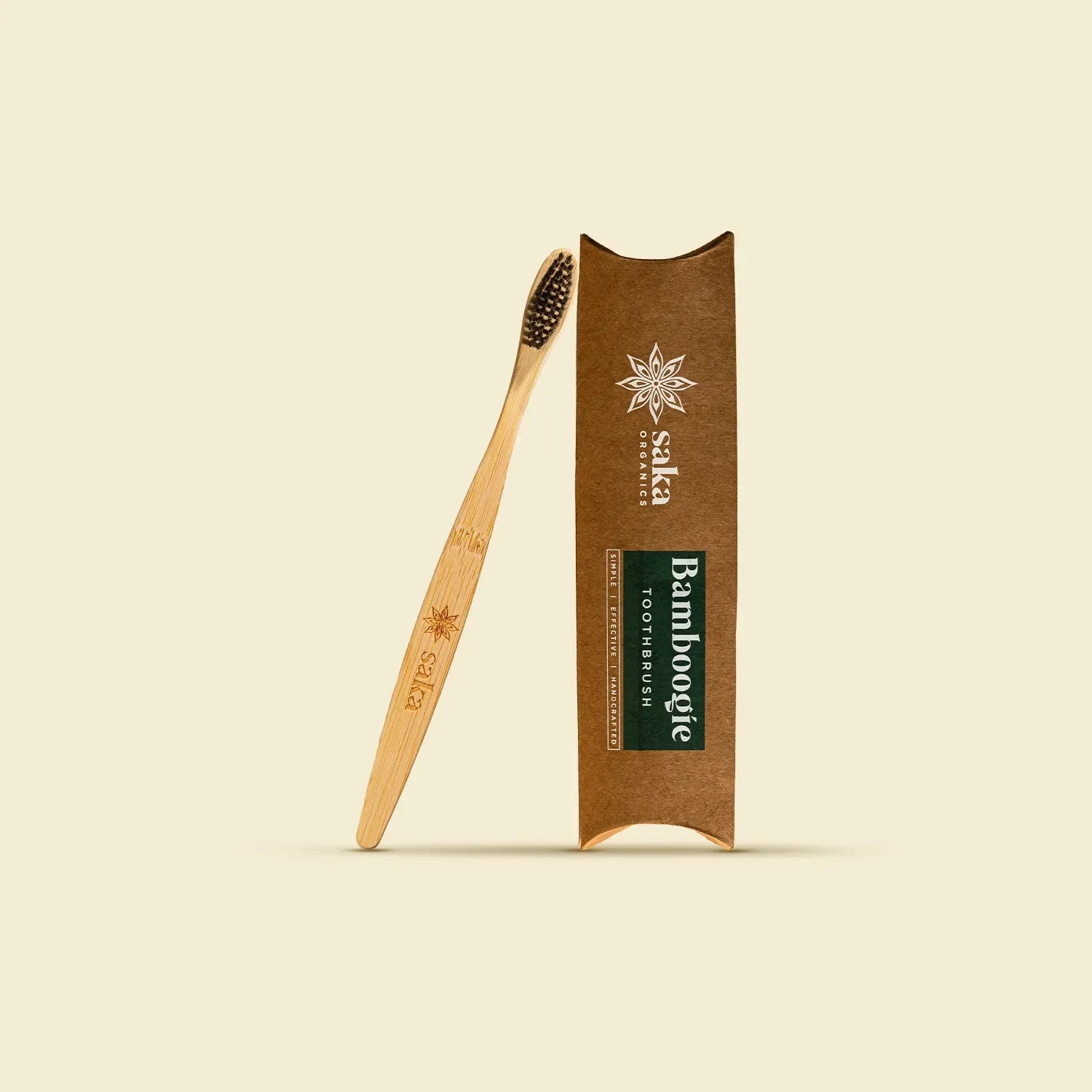
Bamboo Toothbrush
Quantity: 1 pc
- Quantity:
- 1 pc
Pairs well with
Description
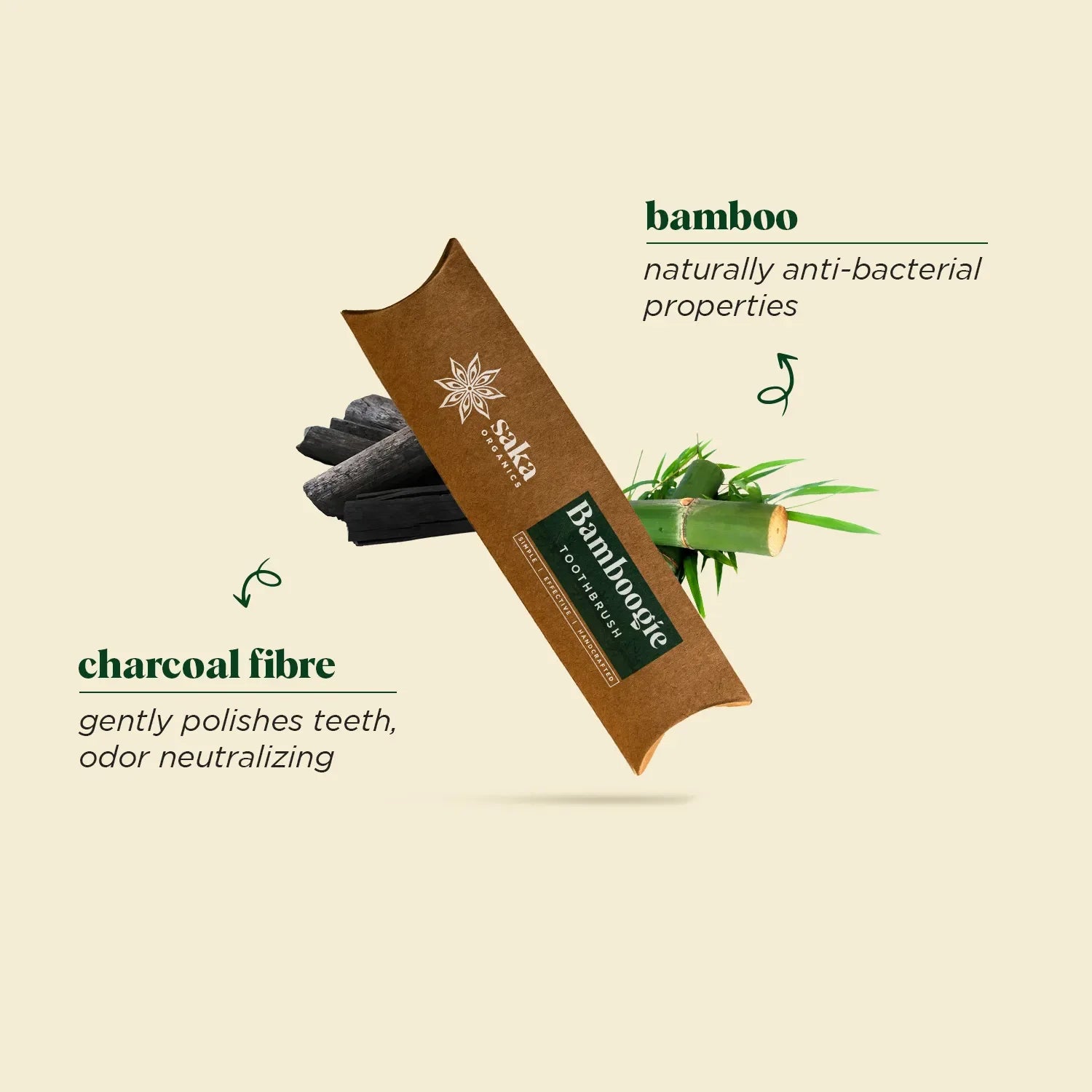
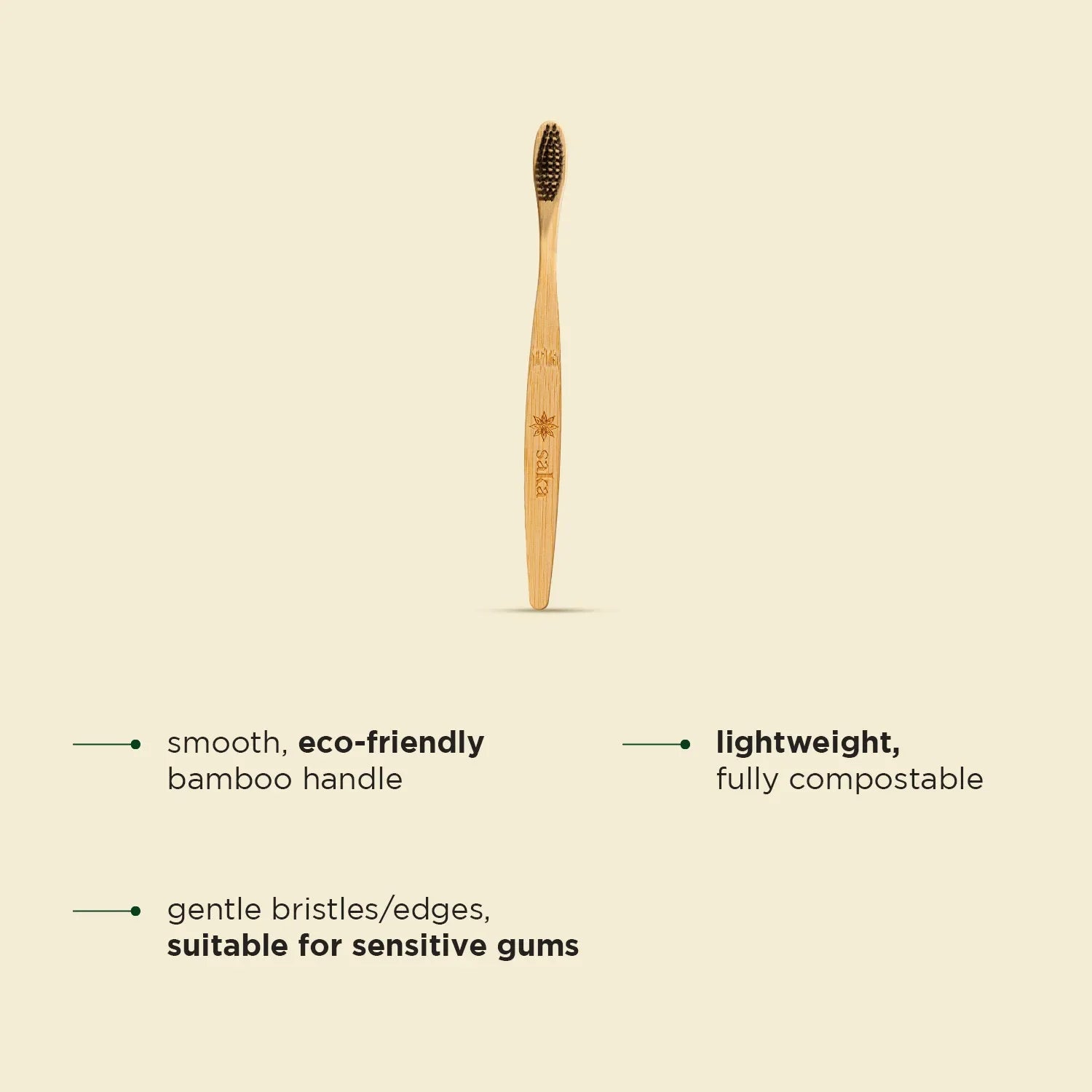
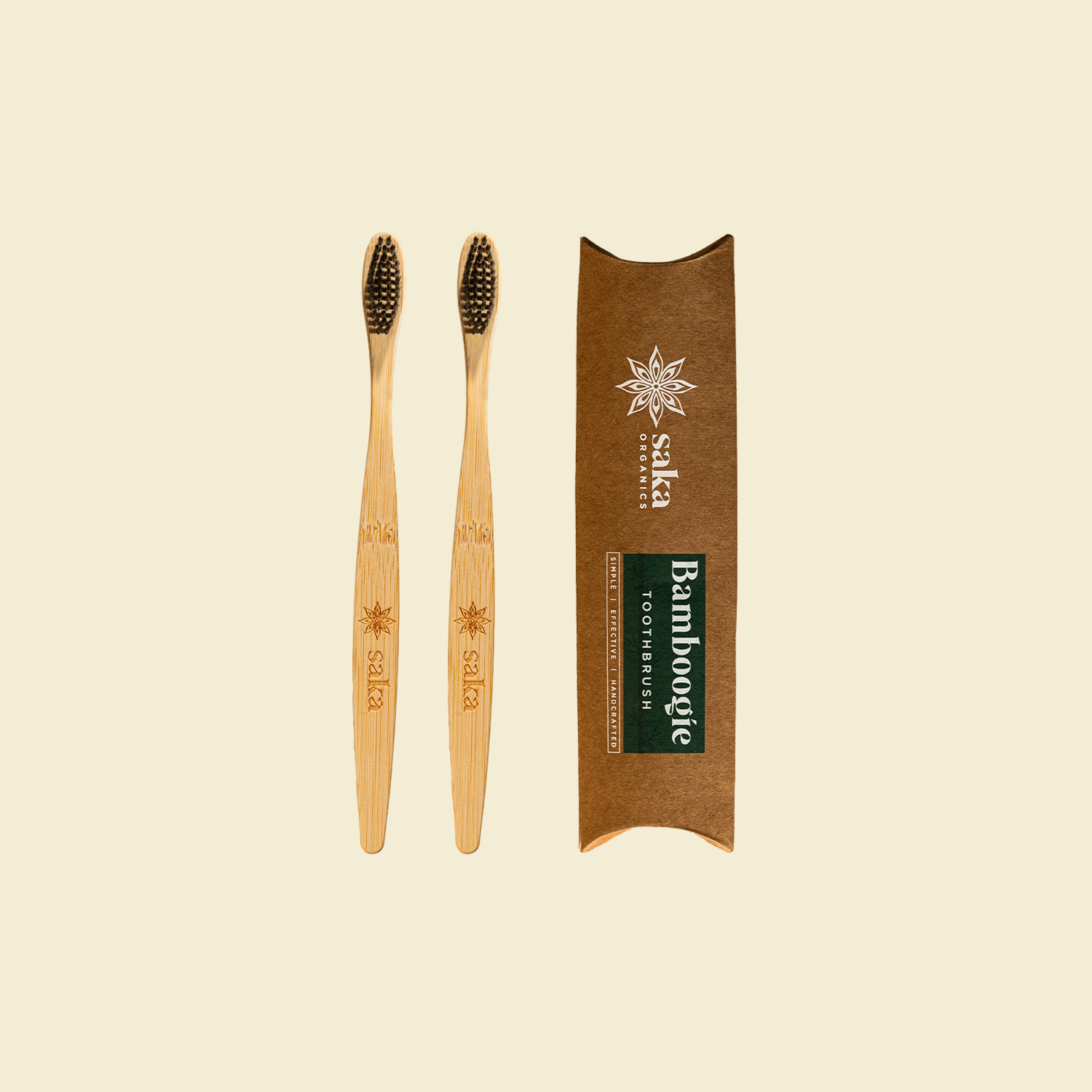
Bamboogie is a bamboo toothbrush with a 100% bamboo wood handle and bristles made from cornstarch and charcoal fibre. Biodegradable. Compostable packaging.
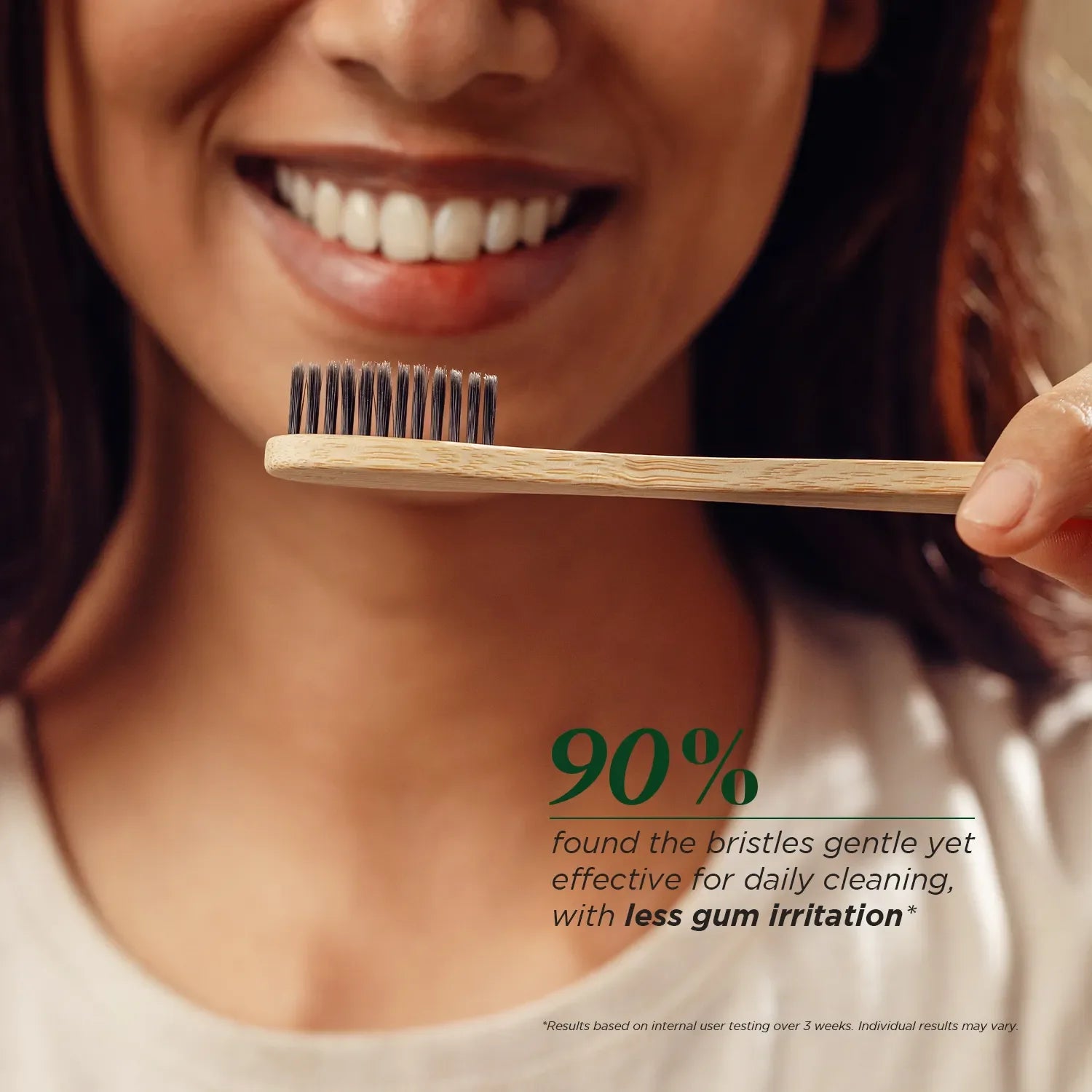
As an organic bamboo toothbrush, it relies on bamboo's natural antibacterial properties to stay hygienic between uses. The bamboo charcoal toothbrush bristles clean gently without harming gums.
What the bristles take care of:
-
Biodegradable handle, durable and lightweight
-
Cornstarch and charcoal bristles for gentle cleaning
-
Natural bamboo antibacterial properties throughout
✨ Handcrafted with Care | 🌿 Nature-Powered | 💚 Everyday Wellness
Experience the goodness of conscious self-care—add it to your routine today.
Packaging Information
Manufactured by:
SSO Organics Privatet Limited
1-86, Penumarthi, Kakinada, AP-533005.
ML No: AP-17-0008263
Marketed by:
SSO ORGANICS PRIVATE LIMITED
Ground Floor, A & A Lake Front, Durgam Cheruvu Road,
Madhapur, Hyderabad, Rangareddy, Telangana - 500081
Caution: For external use only.
Storage: Store in a cool and dry place.
Best Before: *12 Months (From Date of Manufacturing)
Country of origin: India
Ingredients
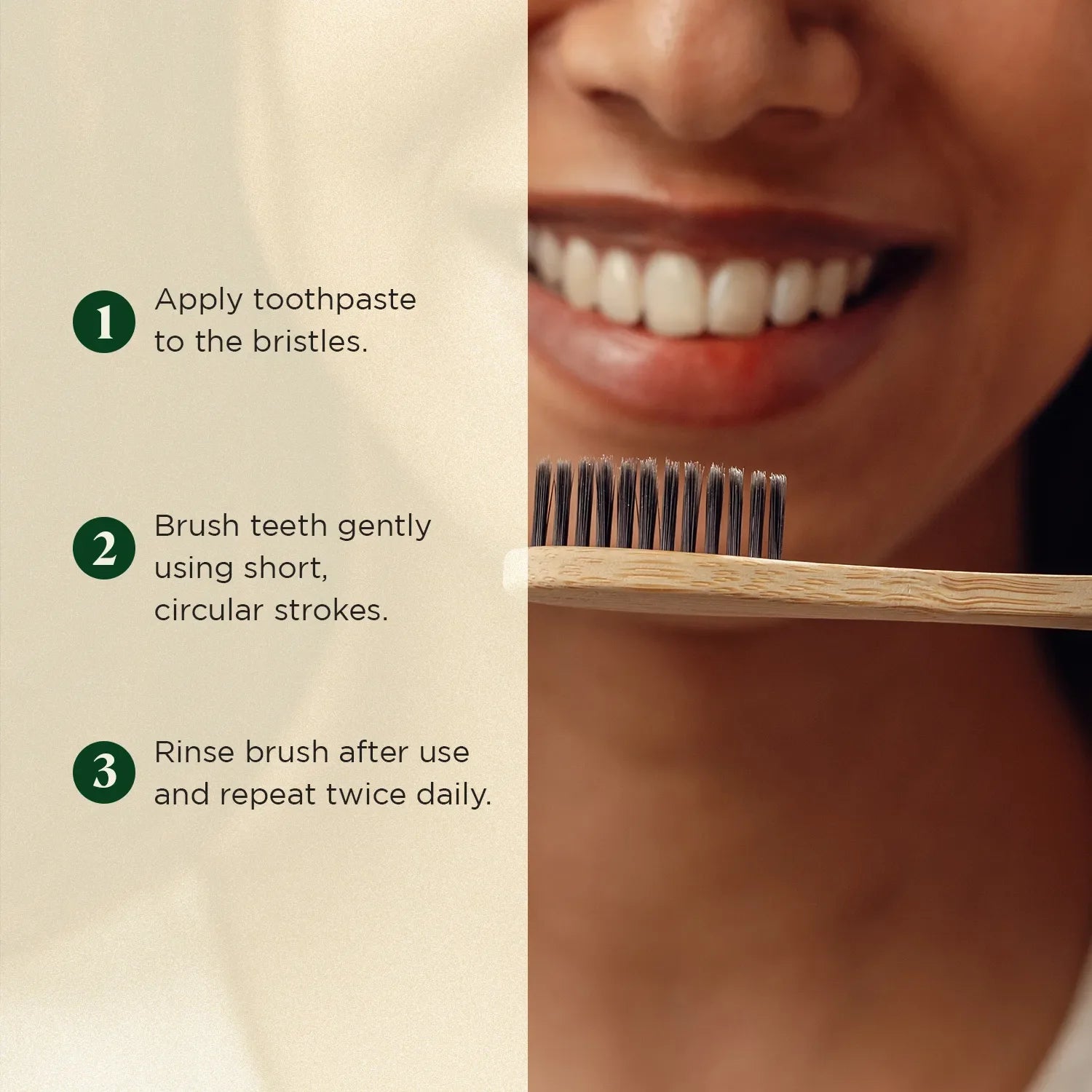
Directions Of Use
End Of Life
If you have any questions, you are always welcome to contact us. We'll get back to you as soon as possible, within 24 hours on weekdays.
-
Shipping Information
Use this text to answer questions in as much detail as possible for your customers.
-
Customer Support
Use this text to answer questions in as much detail as possible for your customers.
-
FAQ’s
Use this text to answer questions in as much detail as possible for your customers.
-
Contact Us
Use this text to answer questions in as much detail as possible for your customers.
Shop the Feed
FAQs
Please read our T&C page to find out more.
How does the Bamboogie bamboo toothbrush perform compared to a conventional plastic toothbrush is there any compromise in the actual brushing experience?
This is the question most people have before making the switch, and the honest answer is that a well-made organic bamboo toothbrush like Bamboogie performs comparably to a plastic toothbrush in every meaningful way. The bristles typically nylon or plant-based are the same material used in conventional brushes and deliver the same level of plaque removal when used with proper technique. The handle, being bamboo rather than plastic, actually has a few practical advantages: it's slightly heavier and more solid in the hand, which gives a more controlled grip, and bamboo's natural texture means it doesn't slip in wet hands the way smooth plastic handles often do. The only real difference is aesthetic and environmental the Bamboogie handle will not last indefinitely in the bathroom the way plastic does, which is precisely the point.
What makes Bamboogie genuinely sustainable compared to other toothbrushes marketed as "eco-friendly," and how should it be disposed of?
The sustainability of a bamboo toothbrush lies primarily in the handle which makes up the vast majority of the product's material. Bamboo is one of the fastest-growing plants on earth, capable of being harvested in 3–5 years compared to decades for hardwood trees, and it requires no pesticides or artificial irrigation in its natural growing conditions. The Bamboogie's handle is fully biodegradable and compostable, meaning it will break down naturally at the end of its life rather than persisting in a landfill for hundreds of years the way plastic does. For disposal, remove the bristles with pliers before composting (nylon bristles are not biodegradable check if your version uses plant-based bristles, which can be composted whole). The handle can then go into a home compost or garden bed, completing a genuinely closed loop in a way no plastic toothbrush ever can.
Are there any particular oral health benefits to using a wooden toothbrush, or is the advantage purely environmental?
While the primary motivation for choosing a wooden toothbrush is environmental, there are some oral health-relevant properties worth knowing. Bamboo is naturally antimicrobial it contains a compound called bamboo kun that inhibits bacterial growth on the surface of the handle. This means the Bamboogie handle is less likely to harbour bathroom bacteria between uses compared to a porous plastic handle, which can develop microscopic scratches over time that trap microbes. The bristle quality and configuration remain the primary determinants of oral health outcomes, but starting from a naturally cleaner handle is a small, genuine benefit. The key oral care factors remain unchanged brush for two minutes twice daily, replace your bamboo toothbrush every 3 months, and use correct technique regardless of what material your handle is made from.
How should the Bamboogie organic bamboo toothbrush be stored to prevent the handle from deteriorating prematurely in a wet bathroom environment?
Bamboo, while naturally moisture-resistant, is not waterproof and a bathroom is one of the most consistently humid environments in the home. To extend the life of your Bamboogie, store it upright in a holder that allows air to circulate around the handle rather than trapping moisture at the base. Avoid leaving it lying flat on a wet sink surface or storing it in a closed container immediately after use. After brushing, shake off excess water and allow it to air-dry between uses. Some people lightly rub a tiny amount of coconut oil into the handle once a month to condition the bamboo and slow moisture absorption this is optional but does help in very humid climates. Even with ideal care, expect the handle to show natural weathering over its 3-month lifespan, which is completely normal for a natural material.
Is Bamboogie suitable for children, and are there different sizes or bristle softness options to consider for younger users?
Children can absolutely use a bamboo toothbrush in fact, introducing sustainable oral care habits early is a meaningful long-term choice. The key considerations for children are handle size and bristle softness. Children's mouths and developing gums require softer bristles and smaller brush heads than adult versions, and it's worth confirming whether Bamboogie offers a child-specific size or whether the adult version is appropriately sized for your child's age. For children under 6, supervision during brushing remains important regardless of the toothbrush type not because bamboo poses any risk, but because effective technique at that age still requires adult guidance. If your child tends to chew on their toothbrush (common in younger children), check the handle periodically for any splintering, and replace it promptly if any fraying appears.
Let customers speak for us
Just started using it. Smell natural and feels good. yet to realize results. the packing - the bottle, oil dispensing pump and the cap are solid & thoughtfully designed for easy and spill proof usage.

"Premium quality toothbrush"
The packaging is beautiful and the product feels thoughtfully designed. A small change that makes a positive impact.

Premium quality tongue cleaner"
The product feels strong, lightweight, and well-designed. I appreciate the natural material and elegant packaging.

"Love the herbal formula"
I was looking for a natural tooth powder and this one exceeded my expectations. It feels gentle and refreshing.

"Love the Ayurvedic touch"
This tooth powder reminds me of traditional oral care remedies. The ingredients feel natural and gentle for everyday use.

⭐️⭐️⭐️⭐️⭐️
"Beautiful herbal bath powder"
I love using natural skincare products, and this one gives my skin a fresh and smooth feeling without feeling heavy.

"Best hair oil for my routine!"
I have been using this hair oil regularly and my hair feels much softer and healthier. The natural ingredients make it feel gentle and nourishing.
"Relaxing bath experience!"
This bath salt turns my normal bath into a spa-like experience. The natural fragrance feels calming and leaves my body feeling refreshed.

"Loved the coffee fragrance!"
The scrub smells amazing and makes my skin feel super soft after every use. My skin feels fresh, smooth, and hydrated.

Amazing handmade soap with a refreshing eucalyptus and camphor fragrance. It cleanses well, leaves my skin soft and hydrated, and provides a cooling, spa-like feeling after every use. Great quality product and perfect for everyday use. Will definitely purchase again!

This Activated Charcoal & Mint Detox Soap is one of the best handmade soaps I’ve used. It deeply cleanses my skin, removes excess oil, and leaves it feeling fresh and revitalized. The charcoal helps draw out impurities, while the mint provides a cooling and refreshing sensation. Despite its deep-cleansing properties, it doesn’t dry out my skin and keeps it feeling soft and hydrated. The natural ingredients and pleasant mint fragrance make it perfect for daily use. Highly recommended for anyone looking for a refreshing detox soap!

Excellent handmade soap! It leaves my skin clean, soft, and nourished without dryness. The turmeric helps brighten my complexion, while the shea butter keeps my skin moisturized. Great quality product with a pleasant natural scent. Will buy again!

I've avoided hair oils for years because most of them feel too heavy and greasy. This one was surprisingly lightweight and didn't leave my hair looking flat or oily. It's easy to apply, washes out without multiple rounds of shampoo, and feels much more pleasant to use than traditional hair oils.
I wasn't expecting much when I first tried this soap, but it quickly became one of my favourites. It lathers well, has a natural feel to it, and leaves my skin looking refreshed. After a few weeks of regular use, my skin looked clearer and more radiant. Simple, effective, and does exactly what I was hoping for.
Picked up a bunch of products from Saka Organics recently, and the Eucalyptus Soap has been the standout for me. It has a really fresh, clean scent that makes morning showers feel instantly more refreshing. I've also been using their lip balm and tooth powder, and both have exceeded my expectations. What I like most about the brand is that the products feel simple, honest, and effective - nothing unnecessary, just products that work. Will definitely be trying more from their range.