

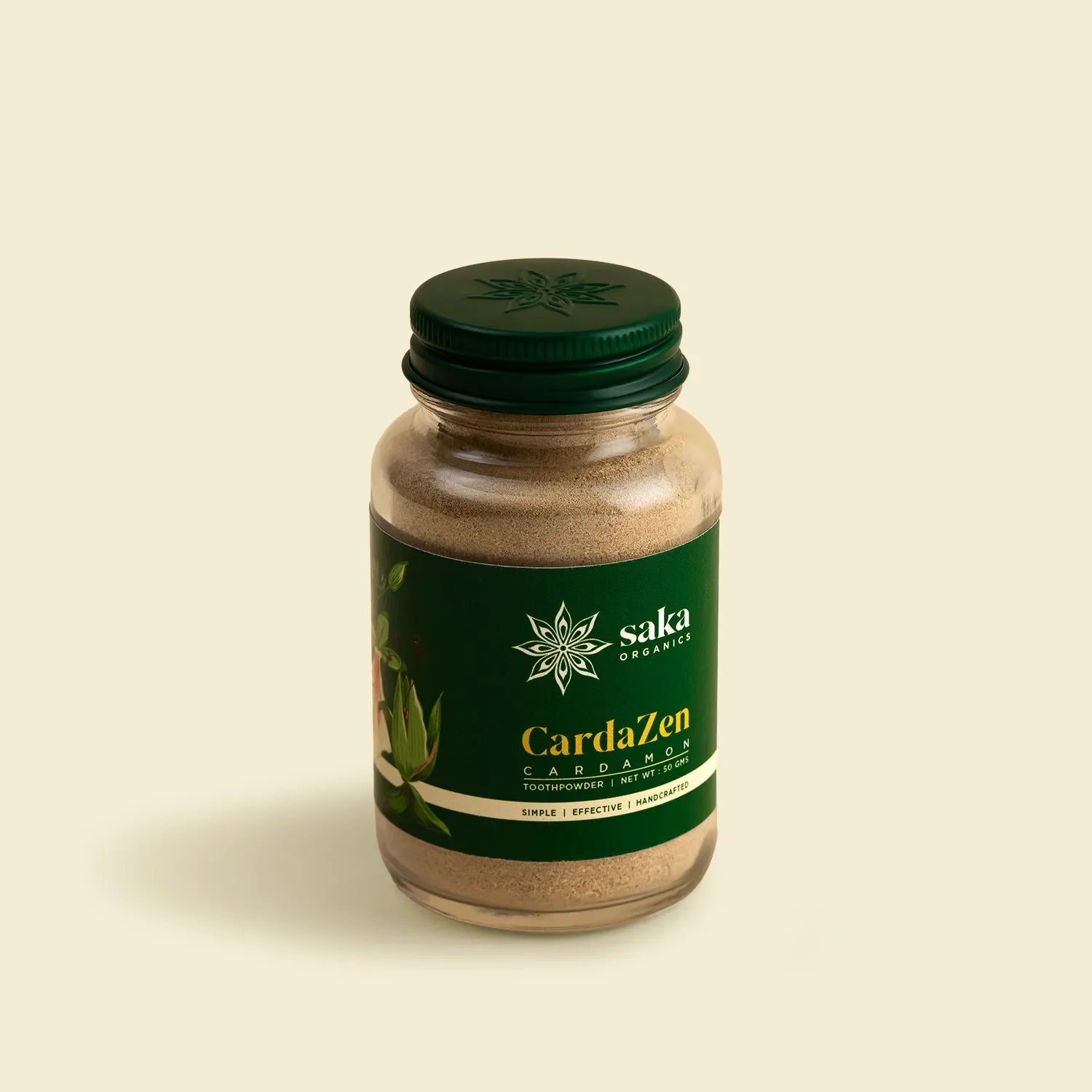
Cardamom Tooth Powder
Quantity:
Pairs well with
Description
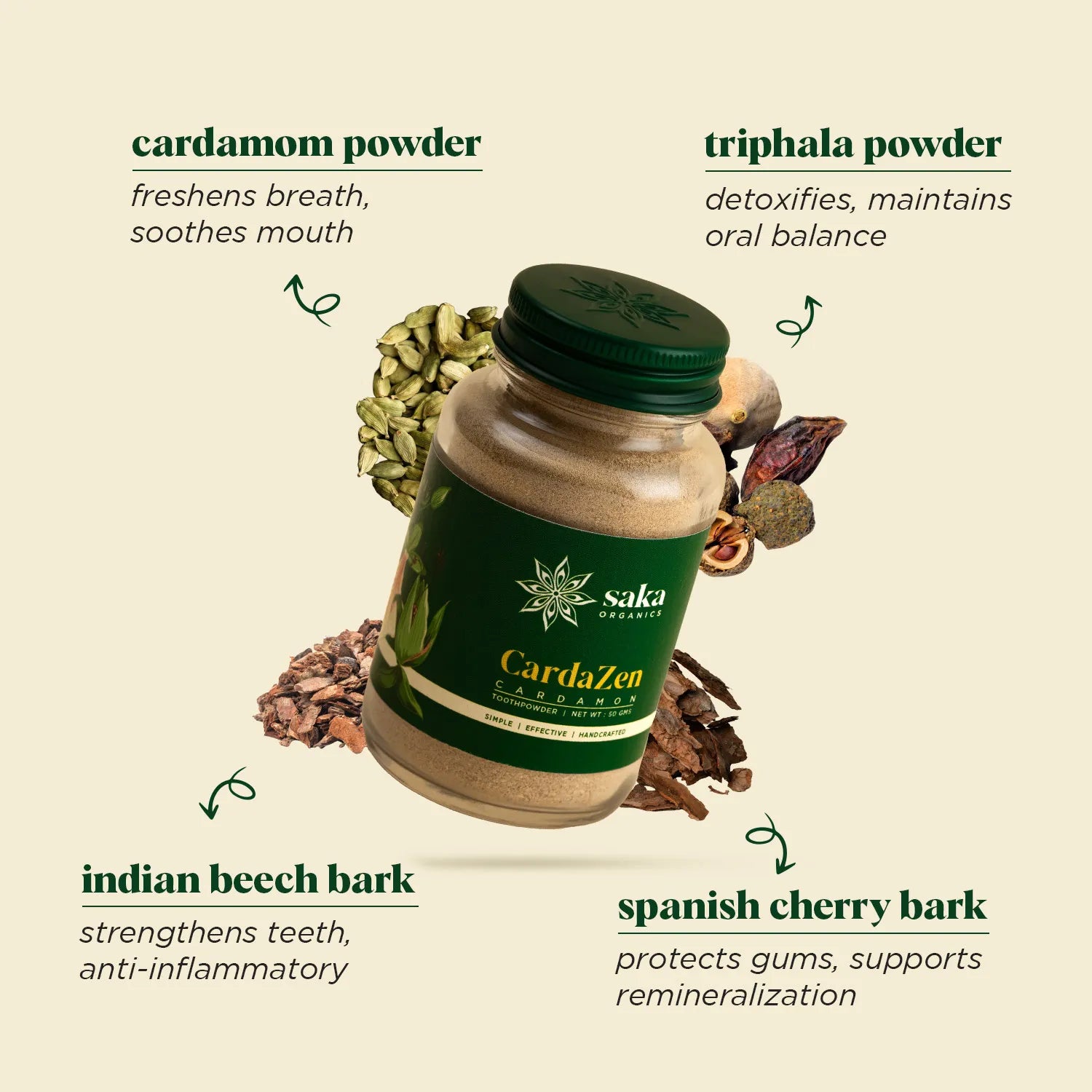
CardaZen is a handcrafted cardamom toothpowder with spanish cherry bark, indian beech bark, triphala powder, prickly chaff roots, cardamom powder, and stevia. A sulphate-free herbal tooth powder and natural tooth powder, it cleanses with spanish cherry and indian beech bark while cardamom freshens the breath after each brush.
What each brush takes care of:
-
Cleanses with spanish cherry bark and indian beech bark
-
Freshens breath with cardamom powder
-
Supports gum health with triphala and prickly chaff roots
✨ Handcrafted with Care | 🌿 Nature-Powered | 💚 Everyday Wellness
Experience the goodness of conscious self-care—add it to your routine today.
Packaging Information
Manufactured by:
SSO Organics Privatet Limited
1-86, Penumarthi, Kakinada, AP-533005.
ML No: AP-17-0008263
Marketed by:
SSO ORGANICS PRIVATE LIMITED
Ground Floor, A & A Lake Front, Durgam Cheruvu Road,
Madhapur, Hyderabad, Rangareddy, Telangana - 500081
Caution: For external use only.
Storage: Store in a cool and dry place.
Best Before: *12 Months (From Date of Manufacturing)
Country of origin: India
Ingredients
Directions Of Use
End Of Life
Cardamom Tooth Powder
If you have any questions, you are always welcome to contact us. We'll get back to you as soon as possible, within 24 hours on weekdays.
-
Shipping Information
Use this text to answer questions in as much detail as possible for your customers.
-
Customer Support
Use this text to answer questions in as much detail as possible for your customers.
-
FAQ’s
Use this text to answer questions in as much detail as possible for your customers.
-
Contact Us
Use this text to answer questions in as much detail as possible for your customers.
Shop the Feed
FAQs
Please read our T&C page to find out more.
What makes cardamom a meaningful active ingredient in a toothpowder, and how does Cardazen use it differently from just adding a flavour?
Cardamom has been used in traditional oral care across South Asian and Middle Eastern cultures for centuries long before its oral health properties were validated by modern research. The essential oils in cardamom, particularly cineole, contain potent antimicrobial and anti-inflammatory compounds that actively combat the bacteria responsible for tooth decay, gum inflammation, and bad breath. In Cardazen, cardamom functions as a genuine active ingredient rather than just a flavouring agent it contributes to reducing the microbial load in the mouth, soothing gum tissue, and freshening breath from the source rather than just masking odour. This is meaningfully different from using a synthetic mint flavour, which provides no antibacterial action. Cardamom also has natural breath-neutralising properties because it addresses volatile sulphur compounds directly rather than overpowering them with a strong competing scent.
How does Cardazen compare to conventional fluoride toothpastes as a daily toothpowder, and is it suitable as a complete replacement?
This question deserves an honest answer. Fluoride remains the most extensively researched and proven ingredient for preventing tooth decay by strengthening enamel and Cardazen, as a natural toothpowder, does not contain fluoride. For individuals at low risk of cavities those with good dietary habits, adequate saliva production, no history of frequent decay, and access to fluoridated water using Cardazen as a primary toothpowder is a reasonable choice. For those at higher cavity risk (including children in key developmental years, people with dry mouth, or those with a history of frequent decay), it may be advisable to use Cardazen alongside an occasional fluoride application rather than as a complete replacement. As always, this is a conversation worth having with your dentist based on your individual oral health profile.
Can Cardazen be used as a teeth whitening powder, and how does cardamom contribute to a brighter smile compared to charcoal-based alternatives?
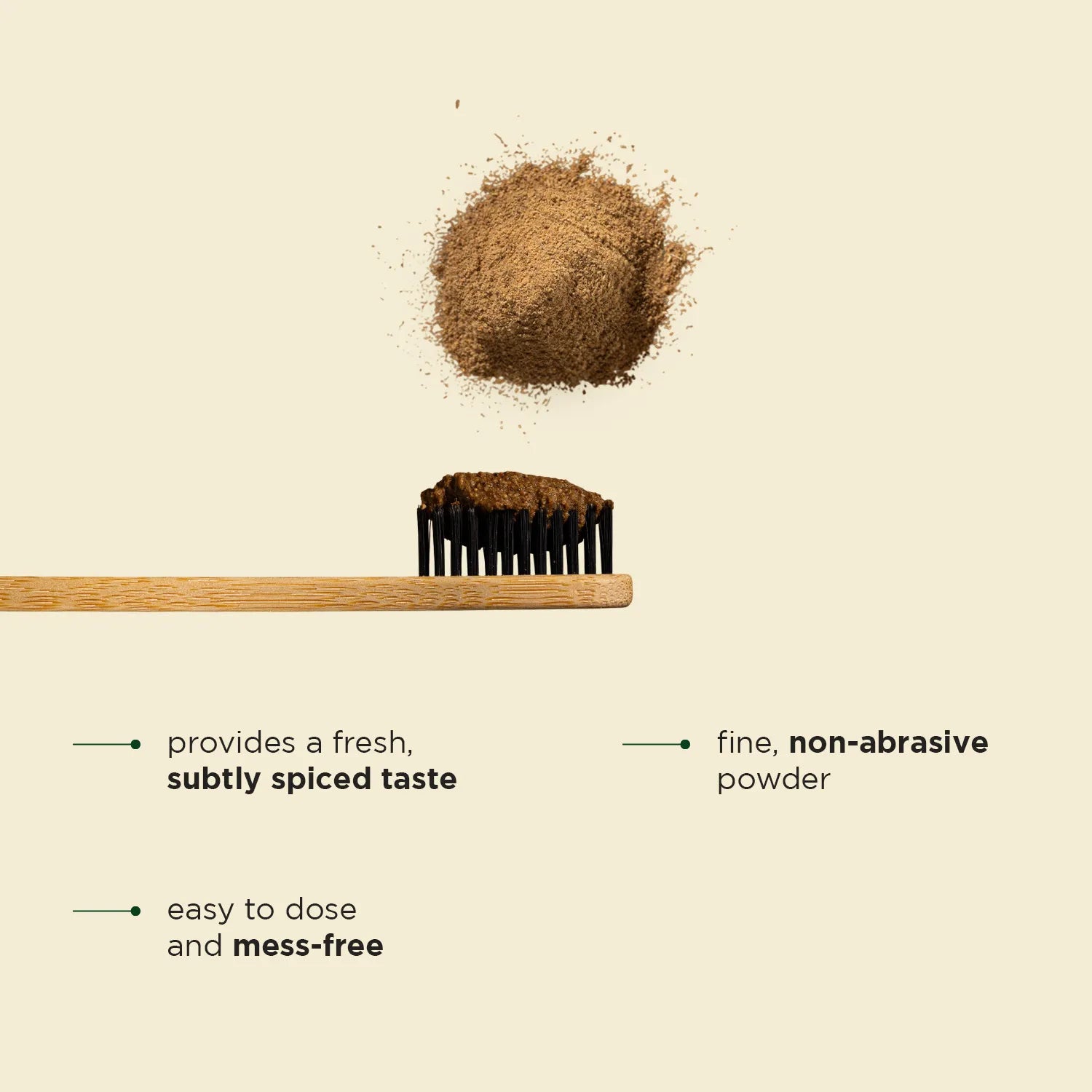
Cardazen delivers whitening through a different mechanism than charcoal-based toothpowders. Rather than using the adsorptive power of activated charcoal to lift stains, Cardazen relies on the mild, natural abrasive action of its powder base to gently polish the tooth surface clearing extrinsic stains from tea, coffee, and food over time without the dramatic visual of a black powder. This makes it a gentler approach to teeth whitening powder better suited for those with sensitive teeth or those who are cautious about charcoal's abrasivity on enamel. The results are more gradual and subtle than charcoal-based options, but the trade-off is a gentler daily experience and less concern about long-term enamel impact. The cardamom itself also contributes to a cleaner oral environment, meaning less opportunity for stain-causing bacterial biofilm to accumulate between brushings.
What is the correct way to use Cardazen toothpowder for someone transitioning from conventional toothpaste, and is there an adjustment period?
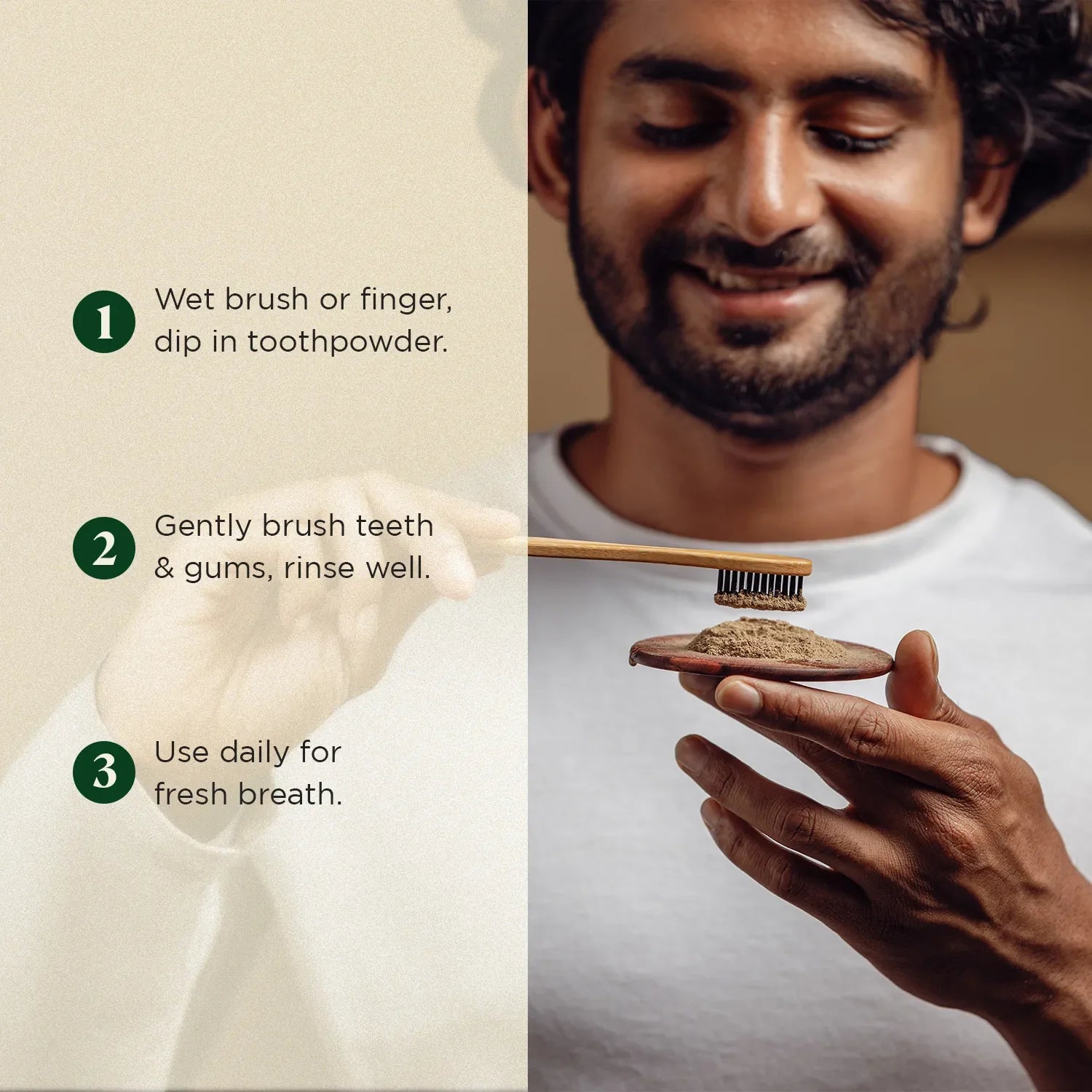
Yes there is an adjustment period and anticipating it makes the transition much smoother. The most significant difference people notice when switching to any toothpowder, including Cardazen, is the absence of foam. Sodium lauryl sulphate (the foaming agent in most toothpastes) has trained most people to equate foam with cleanliness its absence can initially feel like something is missing even when the cleaning is equally effective. Give yourself 2–3 weeks to recalibrate this expectation. Technique-wise, dampen your brush, apply a small amount of Cardazen, and brush for a full two minutes in gentle circular strokes. The cardamom provides a warm, spiced freshness that is quite different from conventional mint pleasant and distinctive once you adjust. After rinsing, your teeth should feel smooth and clean rather than squeaky, which is the sign of effective surface cleaning without over-stripping.
Is Cardazen suitable for the whole family, including children, and are there any age or health considerations to keep in mind?
Cardazen's natural, fluoride-free formulation makes it broadly gentle but suitability across ages requires some thought. For adults and teenagers with established teeth and low cavity risk, it works well as a daily toothpowder. For younger children (typically under 6), the priority in oral care is fluoride protection during the critical enamel development stage which Cardazen does not provide. For this age group, it's better used as an occasional supplement to a fluoride toothpaste rather than a complete replacement, and only under parental supervision since powder format requires more control than paste. For older children and adults who prefer a natural, low-synthetic oral care routine, Cardazen is a thoughtful choice the cardamom flavour is also notably more appealing to those who dislike the intensity of strong mint toothpastes, making compliance with a full two-minute brushing routine more likely.
Let customers speak for us
Just started using it. Smell natural and feels good. yet to realize results. the packing - the bottle, oil dispensing pump and the cap are solid & thoughtfully designed for easy and spill proof usage.

"Premium quality toothbrush"
The packaging is beautiful and the product feels thoughtfully designed. A small change that makes a positive impact.

Premium quality tongue cleaner"
The product feels strong, lightweight, and well-designed. I appreciate the natural material and elegant packaging.

"Love the herbal formula"
I was looking for a natural tooth powder and this one exceeded my expectations. It feels gentle and refreshing.

"Love the Ayurvedic touch"
This tooth powder reminds me of traditional oral care remedies. The ingredients feel natural and gentle for everyday use.

⭐️⭐️⭐️⭐️⭐️
"Beautiful herbal bath powder"
I love using natural skincare products, and this one gives my skin a fresh and smooth feeling without feeling heavy.

"Best hair oil for my routine!"
I have been using this hair oil regularly and my hair feels much softer and healthier. The natural ingredients make it feel gentle and nourishing.
"Relaxing bath experience!"
This bath salt turns my normal bath into a spa-like experience. The natural fragrance feels calming and leaves my body feeling refreshed.

"Loved the coffee fragrance!"
The scrub smells amazing and makes my skin feel super soft after every use. My skin feels fresh, smooth, and hydrated.

Amazing handmade soap with a refreshing eucalyptus and camphor fragrance. It cleanses well, leaves my skin soft and hydrated, and provides a cooling, spa-like feeling after every use. Great quality product and perfect for everyday use. Will definitely purchase again!

This Activated Charcoal & Mint Detox Soap is one of the best handmade soaps I’ve used. It deeply cleanses my skin, removes excess oil, and leaves it feeling fresh and revitalized. The charcoal helps draw out impurities, while the mint provides a cooling and refreshing sensation. Despite its deep-cleansing properties, it doesn’t dry out my skin and keeps it feeling soft and hydrated. The natural ingredients and pleasant mint fragrance make it perfect for daily use. Highly recommended for anyone looking for a refreshing detox soap!

Excellent handmade soap! It leaves my skin clean, soft, and nourished without dryness. The turmeric helps brighten my complexion, while the shea butter keeps my skin moisturized. Great quality product with a pleasant natural scent. Will buy again!

I've avoided hair oils for years because most of them feel too heavy and greasy. This one was surprisingly lightweight and didn't leave my hair looking flat or oily. It's easy to apply, washes out without multiple rounds of shampoo, and feels much more pleasant to use than traditional hair oils.
I wasn't expecting much when I first tried this soap, but it quickly became one of my favourites. It lathers well, has a natural feel to it, and leaves my skin looking refreshed. After a few weeks of regular use, my skin looked clearer and more radiant. Simple, effective, and does exactly what I was hoping for.
Picked up a bunch of products from Saka Organics recently, and the Eucalyptus Soap has been the standout for me. It has a really fresh, clean scent that makes morning showers feel instantly more refreshing. I've also been using their lip balm and tooth powder, and both have exceeded my expectations. What I like most about the brand is that the products feel simple, honest, and effective - nothing unnecessary, just products that work. Will definitely be trying more from their range.